Last night the Siren attended a swell dinner marked by good conversation, good wine, and the best damn roast chicken ever. Since the guests included a number of film writers, naturally the discussion long lingered over the most esoteric, enlightening and intellectual corners of film love...
But after a while we ditched all that and got down to brass tacks: Who was the best-looking director of all time?
We didn't come up with many names. One host ventured that the last time he broached this topic, the one most often mentioned was Francois Truffaut. Well, the Siren loves Truffaut's movies--a lot--but, nah. Then the Siren got up this morning and remembered all sorts of names, most them not mentioned last night.
Thus this mischievous exercise in the most superficial kind of auteurism imaginable.
Frank Borzage
John Cassavetes. How on earth did we forget him?
Vittorio de Sica
Joseph Mankiewicz (on right). Numerous affairs included Linda Darnell, Judy Garland, Joan Crawford and Loretta Young.
Leo McCarey. Frequently cited as a huge influence on Cary Grant's screen persona.
Vincent Sherman. Had affairs with Bette Davis and Joan Crawford. Lived.
Luchino Visconti
Raoul Walsh. Pre-eye-patch Walsh, in full Mexican bandit regalia, was our host's pick.
Orson Welles. The most beautiful depraved baby face of all time, and as a bonus, you get that voice. Precisely the kind of voice you want to hear saying, "Good morning."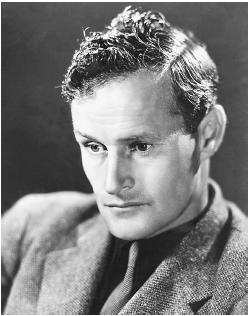
William "Wild Bill" Wellman. The Siren's pick until she was reminded of Welles' youth.

Everyone loves good news, and in 2007 classic film lovers got six doses of it: the RKO “Lost and Found” movies, unseen for decades due to an unusual rights situation, dusted off and unveiled for a delighted public by Turner Classic Movies. The RKO Six are Rafter Romance (1933), the Siren’s personal favorite of the group, a charming Depression comedy starring a young and delicious Ginger Rogers; Double Harness (1933), a wry comedy-drama of marriage and morals with William Powell and the underseen Ann Harding; Stingaree (1934), a rare musical outing for William Wellman and Irene Dunne’s second singing film role; Living on Love (1937), a remake of Rafter Romance whose virtues include Franklin Pangborn; One Man’s Journey (1933), a medical drama starring Lionel Barrymore and Joel McCrea; and its superior remake, A Man to Remember (1938), which boasted Garson Kanin’s first credit as director and a screenplay by Dalton Trumbo.
Not many cinephiles wallowing in all this RKO bounty realized that the movies had reappeared due in part to the efforts of Lee Tsiantis, a film lover and industry veteran toiling in the field of rights research for TCM and Warner Home Video. Well, toiling is not the word--Lee loves his work and cares passionately about preservation. Since rights issues stand in the way of our seeing a number of cherished films, Lee agreed to answer some questions via email about the RKO Six and the nuts and bolts of his job.
Please describe your role at Turner Broadcasting System.
I am a Corporate Legal Manager at Turner Broadcasting System's Entertainment Division in Atlanta, and have been with the company for 12 years. Prior to Turner, but still based in Atlanta, I handled regional publicity/promotions for a major studio and long ago worked in the late, lamented 16mm nontheatrical distribution market for Films Inc., where I was able to view hundreds of films from their library. My work tools at Turner are the supporting original studio legal documents of the approximately 3900 RKO, pre-1986 MGM and pre-1950 Warner Bros. features that Ted Turner bought in 1986-87. These films comprise the Turner Entertainment Co. (TEC) library, which is currently owned and administrated by Warner Bros. Entertainment. I do rights research on these films for various corporate clients, including Turner Classic Movies (TCM) and sister company Warner Home Video, which exploits the library on DVD and now Blu-ray. It certainly doesn't hurt to have a film background that helps me to connect the dots found in the documents.
Were the mechanics of resolving the rights entanglements of the RKO Six typical of your work?
The situation that brought the six RKO "Lost and Found" titles to light was atypical. The inquiries that come my way from company clients usually ask me to confirm TEC's rights in a particular film or asset, reaffirming a division's ability to exploit the property. Usually, and ideally, these rights are fairly broad, allowing for distribution and exhibition of a film worldwide, perpetually and in all media.
For an unresearched asset, I have to refer to the original studio agreements by which a source story or underlying literary property (in shorthand legalese, the ULP) was acquired. Those agreements, along with the copyright registration records, are key links in proving TEC's chain-of-title ownership of the "derivative work" (the film).
The path that led to the discovery of the RKO Six's rights situation began in 2006, when a TCM viewer asked why a 1933 John Cromwell film, Double Harness, never seemed to show up on the channel's schedule. As it was produced by RKO, it should have been part of the TEC library, but it wasn't on any of the master lists of TEC/RKO titles. TCM's Senior Programming Manager, Dennis Millay, asked me to research the film, and through evidence in the meticulously maintained and organized RKO documents, I was able to piece together a narrative that traced the ownership history not only of Double Harness, but also five other RKO films of the period. 
It turned out all six were sold as a package out of the RKO library to former studio head Merian C. Cooper in 1947. Thus, the sale predated by 40 years Turner's 1987 acquisition of its distribution rights to the RKO titles; the six films were never part of the library Turner bought. With dogged persistence and the help of the Internet, Dennis and I were able to track down the son of the person who had been assigned Cooper's copyright ownership--who was totally unaware of that ownership--and six months later, TCM purchased all right, title and interest to the films from his family. Additionally, once prints were tracked down (we even found materials located in France and the Netherlands), TCM financed the cost of physically generating 35mm film preservation elements on all six titles (heroic work here from Dennis), guaranteeing they would have as close to a perpetual big-screen life as is physically possible with film.
After a single-week theatrical engagement at the Film Forum in NYC in Feburary, 2007, the films had their TCM broadcast premieres that April. Barring occasional showings at gatherings like Cinefest in Syracuse, NY, the films hadn’t been shown to a wide audience in almost 50 years. The whole saga, for those interested, can be found here.
None of the titles rewrite film history, but virtually all have distinctive attributes; Garson Kanin's A Man to Remember (1938) seems especially timely today, as it deals with medical ethics and health care responsibilities, but in the context of a deceptively small story about an altruistic country doctor. Film culture is enormously enriched by little gems such as the RKO Six, and TCM's role in resurrecting them attests to the channel's perseverance and commitment to keeping the culture alive.
I think we might have tapped the mother lode for this unorthodox category of rights-orphaned films; we haven't since come across a similar grouping to revive from obscurity.
What role can film preservation funding play in helping to resolve rights issues that keep films unseen? Must the profit motive always play a part?
I would only say that if a film's rights are unresolved, making the film impossible to distribute, there's little incentive to spend preservation money on it. For a studio, funds are better spent on owned, but unexploited assets in need of restoration--with no rights intangibles. Studio preservationists have enough on their plates trying to prioritize and save films whose rights are clear and unencumbered, but whose materials may be on their last legs.
Have you found any patterns in issues that tie up a movie's rights? Are the problems more prevalent with certain types of films?
Legal issues that prevent distribution of a film vary greatly and generally speaking, rarely have anything to do with the type of film in question. Instead they often have everything to do with the term of the original grant of rights in the underlying literary property, or ULP, by an author to the studio producing the film. On rare occasions, the story rights term will expire altogether, or expire with renewal options, and the studio, in order to continue to exploit the film (and despite the fact it may possess a valid copyright in the film itself), must renegotiate an extension with the ULP author, the author’s heirs or other successor-in-interest.
If the ULP owners hold out for what might be considered a disproportionate renewal fee that exceeds what the studio expects to economically return on the title, there can be an impasse, resulting in the frustrating situation where the studio owns the film--but can't distribute or otherwise exploit it. This is doubly frustrating if viable--and sometimes original camera negative--film materials exist in studio vaults.
As a result, certain films have been held up for decades in rights limbo--or at least until the film's ULP lapses into the U.S. public domain. In certain cases, the studio wants to negotiate with the owner of the story rights, but can't track the owner down! This is common in the case of authors who may reside outside the U.S., or authors whose families may not even be aware they are successors to a relative's literary rights. When trails go cold, major sleuthing is in order, but the sheer task of administration can impede the inclination to do the follow-through.
In 1990, a controversial Supreme Court decision involving copyright renewal rights to the Cornell Woolrich short story on which Rear Window was based had the immediate effect of tying up U.S. distribution to a number of notable films. The particulars are too complex to go into here, but for those who are interested (and have the stamina), the full text of the court’s decision is available online.
Do you have any encouraging words for those who view personal or collector’s copies of unobtainable films, and worry about their state of preservation?
I will say this: it's unfair to assume that a poor-quality bootleg copy of a long-unavailable film with rights issues might in any way be representative of the actual condition of film materials archived by a studio.
Thank you, Lee. We will continue to hope for more good news from the Turner vaults.

Further to our discussion of Mae Clarke and which was better for an actress--being directed by William Wellman, or poked in the eye with a stick:
As far as the actors are concerned, the stars, I haven't been too fortunate with them. I've made pictures with most of them, but I don't think I'd win any popularity awards. An actor is a peculiar sort of a guy. He's not like you or me. I'm not downgrading them particularly, but they are a different breed. They look in the mirrors all the time. They have to. They have to see what they look like and say lines to themselves. They look at their faces to see which is the best side to be photographed. You know, one of two things has to happen: You've got to fall in love with that guy you're looking at, or you've got to hate the son of a bitch.
(from Mike Steen's Hollywood Speaks.)
Above, from left to right, Wellman, Joel McCrea and film editor James B. Clark on the set of 1944's Buffalo Bill. Looks like it was hot that day. More photos of Wellman films and Wellman at work can be found at the indispensable If Charlie Parker Was a Gunslinger.
Just one more link today but it will keep you very busy indeed. Girish takes on She Wore a Yellow Ribbon and the great John Ford. He shares his own thoughts--he has an especially good take on the recurring motif of, of all things, army reports--and Girish links to an essay roundup at Undercurrent magazine, organized by Chris Fujiwara. There are 18 articles by 18 different writers, so you have plenty of reading here.

The Siren has nothing but work today, but fret not. Robert Avrech has an excellent post up at Big Hollywood about Mae Clarke, the female half of a breakfast gone very, very wrong.
The Siren's admiration for William Wellman's movies just keeps growing, and so some time back she saw the William Wellman episode from The Men Who Made the Movies. And of course the director discussed Public Enemy's most famous scene. (You can read an interview with Scott Eyman that touches on the same thing here.) Wellman wryly noted that he was embarking on a third marriage, the woman was giving him grief, and the director said he would have loved to cut her off in mid-sentence the same way. But, he added, there was no need, once it was on film. (Wellman also claimed the moment was in the script as Cagney throwing the grapefruit.) Almost eighty years after the picture was made, that grapefruit half smashing into Mae Clarke's face still makes most of us wince.
It was a bitter sort of screen immortality for the talented but star-crossed Clarke, who was wonderful in the original Front Page and Waterloo Bridge, and showed she could have done much more opposite Cagney when she gave a warm, charming performance in his low-budget Great Guy vehicle five years later. Clarke had just divorced Fanny Brice's brother when Public Enemy came out and in his memoirs, Cagney talked about how Monte Brice would go into showing after showing, wait for the grapefruit, "gloat," then leave. Cagney also claimed that the bit of business derived from a gangster in Chicago who shoved an omelette in the face of his girlfriend when her breakfast chitchat began to weary him. The eggs, Cagney says, "would have been a shade too messy," so grapefruit it was.
Clarke's story of the scene is even more disquieting than that of Cagney or Wellman, so do go, read, even if Big Hollywood ordinarily isn't, um, your thing. Robert goes deep into Clarke's truncated career and unhappy life, and it's a splendid tribute to her.
The Siren wonders if Clarke got some small measure of vengeful satisfaction in knowing that for the rest of his life, Cagney seldom went into a restaurant without some joker sending him a plate of grapefruit.

So, Dennis Cozzalio of the splendid Sergio Leone and the Infield Fly Rule tagged me with this "12 Movies I Need to See" meme. Now, as I understand it, the original meme was supposed to be about movies that you wanted to see, but could not locate, perhaps in the generous supposition that you've seen all the important stuff that's available. Well, there's a lot the Siren hasn't seen. It is, to be blunt, fucking embarrassing, some of the movies I haven't seen. The biggest gap: no Robert Bresson. Nary a film. You can all log off right now.
But rather than indulge in my own form of Cinematic Humiliation, à la David Lodge, I decided to combine this with another occasional meme from my beauty-blogger pals. This is called the Use It Up Challenge. If you're a beauty-product junkie, you always wind up with a bunch of half-used stuff abandoned in the back of your medicine chest or vanity case, waiting patiently to be taken out and played with again like so many cosmetic Velveteen Rabbits. The Use It Up Challenge asks you to take out the stuff, use it up, recycle the containers and move on with your life. It's a very good thing to do. (Although it has risks. In trying to use up one Serge Lutens perfume, an extraordinarily pungent jasmine scent called A La Nuit, the Siren succeeded in putting herself off jasmine for almost two years.)
So when this homework assignment came up, the Siren's head immediately swiveled from her computer screen to her DVD shelf, and the group of discs she still hasn't watched. It's a diverse and poignantly large group. Poor little guys. They don't ask much, just their chance to strut and fret upon the screen, and instead the Siren keeps tuning into her TCM addiction or her Netflix discs or Netflixing old Columbo episodes (Columbo is what I do for stress, instead of hard liquor) or popping into other people's blogs.
There are the DVDs that the Siren bought, unwrapped and hasn't watched yet, and those are bad enough. But the ones that really reproach her are the unseen movies sent by friendly bloggers. These wonderful guys went to all that trouble, and still I haven't watched. What's wrong with me? I guess I procrastinate a lot. I'd tell you for sure, but I won't be able to ponder it until a bit later in the week.
So here's a list for the Siren's "12 I Haven't Seen, So Use Them Up" Challenge. I am starting this with a handicap, in that I still haven't purchased a DVD player. I'm having a bit of Consumer Anxiety, trying to decide what to get. As soon as this is rectified, however, I am going to watch 'em all, and post at least something brief as I periodically check them off the list.
The first three were received via the kind offices of Mike P., the movie brain known as Goatdog.
1. Heroes for Sale (William Wellman, 1933) Sent to me after I was wowed by Wild Boys of the Road.
2. The Constant Nymph (Edmund Goulding, 1943) Sent to help complete my Joan Fontaine viewing. I read the book as a girl and perhaps that's why I have put it off--it's a tearjerker, if it follows the original story.
3. Christmas Holiday (Robert Siodmak, 1944) Sent because of my kind words for Deanna Durbin. I wanted to schedule this for Christmas but I seem no more capable of watching a Christmas movie at Christmas than I am of finishing all my shopping by Thanksgiving weekend.
The next four came a long while ago via Peter Nelhaus:
4. Blue Swallow (Jong-Chan Yun, 2005) Sent to shore up my shaky Korean film knowledge, without my having to watch someone get tortured.
5. The Curse of the Golden Flower (Zhang Yimou, 2006) Sent because he knows I love both director and star (Gong Li).
6. Exiled (Johnny To, 2006) See #6 (although maybe someone does get tortured in this one, I'm not sure).
7. Letter from an Unknown Woman (Jinglei Xu, 2004) With this one I think I'm just afraid of the comparison to the Ophuls.
This next was received via David Cairns's Duvivier Giveaway.
8. La Fin du Jour (Julien Duvivier, 1939) I will have to get another multiregion to watch it, I'm afraid, but I really want to.
This one was given me ages ago by Girish and somehow I never watched it.
9. The Marriage Circle (Ernst Lubitsch, 1924) God I suck. Why haven't I sat down for this one? It's Lubitsch, for crying out loud.
This one was sent by Flickhead:
10. A Talking Picture (Manuel Oliveira, 2003) Sent because he's a mensch (don't tell him I said so) and because I expressed admiration for Je Rentre à la Maison.
These two were purchased on Glenn Kenny's say-so:
11. L'Argent (Marcel Herbier, 1928) Glenn swore you can read the intertitles with limited French. Let's hope he's right.
12. Make Way for Tomorrow (Leo McCarey, 1937) Actually, this was purchased on the entire blogosphere's say-so.
As a bonus, to keep with the spirit of the original challenge, here are twelve I dearly want to see, but am having the devil of a time finding:
1. No Greater Glory (Frank Borzage, 1934) Of course there's a Borzage. There's always a Borzage. This one is an antiwar allegory based on a novel by Ference Molnar. It's lovingly described in Lawrence Quirk's The Great Romantic Films. (Quirk's volume was one of my first movie books ever and to this day I use it as a reference. If Wikipedia is right, he's about 75 now, and one day I'd like to meet Mr. Quirk and tell him how much his serious exploration of this type of movie influenced my instinct to take them seriously as well.) No Greater Glory is one of the few Borzage movies that doesn't depict a couple's romance. Instead the focus is on the war games played by feuding groups of boys in a lumber yard, and one misfit boy's (George Breakstone) yearning for love and acceptance from his group's leader (Jimmy Butler, who in a painful irony was killed in action in France in 1945).
2. So Red the Rose (King Vidor, 1935) My father preferred this Civil War movie to Gone with the Wind. Dan Callahan's Senses of Cinema article on King Vidor (do click, Dan is worth reading on any topic) says the movie portrays slavery in a far more complex way than Selznick's opus, which might explain why it failed at the box office. It was such a complete disaster, in fact, that no one would touch a Civil War movie for a number of years afterward. Not available in any format.
3. Only Yesterday (John M. Stahl, 1933) Margaret Sullavan in a loose adaptation of Letter from an Unknown Woman. People who have seen it are unanimous in praising it. Apparently stuck back in whatever hidey-hole Fox has put a bunch of other Paramount movies.
4. The Crash (William Dieterle, 1932) Ruth Chatterton was a remarkable actress, stage-trained but perfectly in tune with the camera. She bowled me over in Lilly Turner, Female and the great Dodsworth. I want to see more.
5. Un Carnet du Bal (Julien Duvivier, 1937) Along with Pepe le Moko, one of the movies that put Duvivier on the map. Not available. Why?
6. Safe in Hell (William Wellman, 1931) My respect for Wellman just keeps growing. This one has popped up in repertory houses and at least once on TCM but I haven't seen it yet.
7. Les Visiteurs du Soir (Marcel Carne, 1942) Because Children of Paradise is one of my favorite movies of all time. As far as I know, not available on DVD in any region. I will probably resort to getting it on VHS at some point.
8. La Traversée de Paris (Claude Autant-Lara, 1956) Available in France but not with subtitles.
9. Floating Clouds (Mikio Naruse, 1955) Available in a French DVD and a BFI edition, in both instances packaged with two others I have already seen, which means that on my budget I don't want to stomach the exchange rate. If I hear one more time that Criterion is working on this one I will scream. Promises, promises! 10. The Private Affairs of Bel-Ami (Alfred Lewin, 1947) Lewin was a true talent and this is said to be one of George Sanders' best performances. Will probably resort to VHS for this too.
11. Summer Storm (Douglas Sirk, 1944) Not available in any format.
12. The Blue Veil (Curtis Bernhardt, 1951) Incredibly rare. One IMDB user claims to have spent more than $1,000 trying to locate a watchable copy. Never released on VHS either. Stars Jane Wyman, who isn't a favorite of mine, but also Charles Laughton and Joan Blondell, who certainly are. Curtis Bernhardt directed A Stolen Life and Sirocco, both of which I liked.
I was going to list What Price Hollywood? (George Cukor, 1932), but to my utter delight, this one is showing Oct. 1 at 11:45 pm on TCM. So that's my deadline for fixing the DVD recorder situation.
I'm not sure there is anyone left to tag, but if you want to keep me company and fess up to the DVDs you own, but need to Use Up, by all means do so. And if you haven't contributed to this meme, or its variations, by all means do so.
(Pictures, from top to bottom: Peter Lorre, as fellow bloggers demand to know why he has been neglecting Bresson. Kidding. It's him in Crime and Punishment. I haven't seen that one either. Next, Christmas Holiday: Gene Kelly and pal want me to watch this one before Halloween, Deanna just wants me to watch it. The Curse of the Golden Flower, also know as Gong Li Displays Entirely New Assets. So Red the Rose--probably not a good one to watch if I'm in a firebreathing political snit. Finally, The Private Affairs of Bel-Ami, which was clearly a feminist polemic.)
(Updated & corrected 9/23. Thanks J.C.)
 The Siren may not have posted much over the last month, but she did manage to watch a fair number of movies, for a change. December was William Wellman month on TCM, a happy development. You can add William Wellman to the Siren's list of Favorite Directors With Shaky Auteur Status, along with Mitchell Leisen, Jean Negulesco and the award-laden but Cahiers-dissed William Wyler. The Siren saw Night Nurse ("You mother!") and rewatched a bunch of old favorites (no amount of Mr. C's pointing out what the Foreign Legion was really like can dim the Siren's love for Beau Geste). The revelation, however, was Wild Boys of the Road, an uneven but sporadically brilliant movie, sort of what might happen if you sliced out two scenes from an Andy Hardy film and used them to bookend They Shoot Horses, Don't They?.
After watching a Depression-era movie the Siren often turns to one of her favorite works of social history, Since Yesterday by Frederick Lewis Allen. Published in 1940, the book has the advantage of immediacy, and the Siren hasn't read anything that betters Allen's descriptions of daily life in the Terrible Thirties. Still, it must be admitted that Allen is not especially good on the movies, drawn as he is to prestige pictures. Here's his introduction to an aside on Hollywood's output:
As for the movies, so completely did they dodge the discussions and controversies of the day--with a few exceptions, such as the March of Time series, the brief newsreels, and an occaisonal picture like I Am a Fugitive From a Chain Gang and They Won't Forget--that if a dozen or two feature pictures, selected at random, were to be shown to an audience of 1960, that audience would probably derive from them not the faintest idea of the ordeal through which the United States went in the nineteen-thirties.To which the Siren responds, "yes and no." Back we go to the Pre-Code debate below--the crackdown in 1934 had the not-so-coincidental effect of trimming back overt social critiques. From that point on, escapism became the far more dominant mode for big-budget Hollywood productions. But if you watched enough genre movies, you still might get a clear enough picture, and if you watched pre-1934 films you would definitely know how hard the times were. And Joseph I. Breen locked up a lot of Pre-Code movies, so Allen's memory of early 1930s cinema may have faded. Wild Boys of the Road, from 1933, offers a particularly bitter and, the Andy Hardy ending perhaps excepted, accurate indictment of the Depression's cruelties.
The beginning of the movie might fit more comfortably in Only Yesterday, Allen's history of the 1920s. Eddie (Frankie Darro) and Tommy (Edwin Phillips) are teenagers concerned with cars, girls and getting into the local dance. Tommy, whose mother takes in boarders, is barely clinging to the middle class. Eddie has his own car and a father with a steady job. But Eddie soon comes home to find his parents talking quietly and desperately at the dining room table: the father has lost his job. Eddie sells his beloved car for scrap, but despite handing the $22 he makes over to his father, he can't find anything steady to help at home. Unwilling to become a burden on their parents, he and Tommy decide to light out for the territories by hopping freight trains.

Wellman filmed the boy's wanderings on location, and the decision gives the long middle section of the film a depth and darkness the Siren has seldom seen in American movies of the era. The two main actors were quite petite, and Wellman plays this up when filming the dangerous task of getting on and off the trains. The sense of peril, of the speed and size and impossibility of stopping the moving train, makes you realize how something like Sullivan's Travels has glossed over the difficulties. (Wild Boys renders train-hopping several times more terrifying, for example, than watching Tony Curtis and Sidney Poitier in The Defiant Ones.) The cars themselves are dark, cold and offer no protection from predators.
Once on the train the boys meet fellow drifter Sally, who is hopping freight trains disguised as a boy. (Sally is played by young Dorothy Coonan, whose later marriage to Wellman lasted 42 years and produced seven children). There's a humorous bit where Sally, unjustly accused of stealing food, lands a hard blow on Eddie's face that sends him scampering to the other side of the boxcar, even as he realizes he's just been hit by a girl. But Wellman still films this in a way that conveys Sally's vulnerablity--she's horizontal, on one side of the frame, face out of sight, two boys looming over her. You sense the physical dangers for these kids at every second. Later, when the threesome join an expanding army of transient children, Sally's comparative luck is re-emphasized as another girl, left alone in a boxcar, is raped by a guard (Ward Bond, in one of his few turns as a rotten apple). When the crime is discovered the boys, already forming their own rough social code, surround and beat the guard (to death, it's implied).
Attempts to find help get nowhere. Sally, Eddie and Tommy descend upon her aunt. The aunt, it becomes clear, has a brothel to run, but at least she seems willing to help. But police raid the place and the kids must go on the run again.
The number of kids on the train grows until Wellman captures an army swarming off the boxcars in an unforgettable image of social breakdown--his camera never lets you forget that these are children. The fear you feel for them reaches a harrowing climax in a scene frequently excerpted in Wellman tributes. Tommy is jumping off the train with the others, but like a much younger kid he doesn't watch where he's going. The boy's head strikes a metal crossing sign with enough force to send him to the ground, dazed, as a train approaches. Tommy tries to crawl away, but he can't make it in time, and his leg is crushed.


The Siren can't imagine watching this film in 1933, especially as what it depicts is no exaggeration. Allen tells us that by the beginning of that year, estimates put the number of transients at about a million: "Among them were large numbers of boys, and girls disguised as boys. According to the Children's Bureau, there were 200,000 children thus drifting about the United States." Adults having failed them, the kids in Wild Boys form their own city in the sewer pipes, taking care of each other in a set-up that probably gave the socialist-hating Breen the willies. The brief period of safety is broken up by cops, acting on orders to clean out the area. The police are sympathetic--"How do you think I feel?" snaps one, "I have kids at home myself"--but they still turn on the firehoses, and the central trio must move on again.
Toward the end there's a James Cagney moment, which Goatdog nails beautifully in his review (by far the best review available on the Web, by the way):
When the police chase Eddie into a movie theater after he inadvertently gets involved in a holdup, the theater in question is showing another Warner Bros. release, the Lloyd Bacon–directed Busby Berkeley musical Footlight Parade. This goes far beyond cross-promotion and into a covert criticism of escapist entertainment (perhaps specifically answered by Preston Sturges with Sullivan's Travels). Footlight Parade is about Chester Kent (James Cagney), who creates live musical prologues for films; during the chase, Eddie ends up onstage where such a prologue might occur, James Cagney looming over him mid-tapdance. Eddie has become one of Kent's prologues, a bit of escapist entertainment for the audience members, who get an extra vicarious thrill out of Eddie's suffering.
The movie winds up with Eddie, Tommy and Sally before a judge. Society, having manifestly failed the kids for the rest of the movie's running time, is suddenly ready to step up to the plate. All three kids will be taken care of, happy days are here again. As Goatdog notes, no one says the name "Roosevelt" but they might as well have his picture looming over the judge's shoulder instead of the equally subtle NRA poster. This ending was altered by Warner Brothers from a far more downbeat original, but Wellman manages a bittersweet coda. Eddie, overcome with happiness, steps outside the courtroom and does a couple of back flips. He turns around, still giddy--and meets the eyes of Tommy, whose leg is gone forever. Tommy gives a melancholy smile, Eddie returns it--but the point is made. Some marks from bad times are permanent.
 Today, July 16, marks the 100th anniversary of Barbara Stanwyck's birth. There was a time when the former Ruby Stevens of Brooklyn was familiar mostly as a white-haired matriarch on television series like The Big Valley, The Colbys or The Thorn Birds. Thank god those days seem to be fading, and now Stanwyck's movie career is deservedly at the forefront. There are many cinephiles who will happily name her as their favorite actress. Well, why should they be any different from Stanwyck's Hollywood peers? Here is just a small sample of what the Siren turned up in her search for what other professionals thought of "Missy," as her friends called her:
Beloved by all directors, actors, crews, and extras.--Frank Capra
She's one of the greatest women and the one of the greatest actresses I ever worked with.
--Walter Huston
The best actress I ever worked with.
--Joel McCrea
Stanwyck, of course, was a brilliant actress. She could do anything.
--William Wellman
Working with Barbara Stanwyck was one of the greatest pleasures of my career.
--Fritz Lang
[Howard Hawks] always ranked her among the best actresses with whom he ever worked.
--Hawks biographer Todd McCarthy
Barbara Stanwyck is a fantastic actress. When she makes a gesture as she speaks a line, she has a way of suspending that motion in mid-air for a split second on a certain word which gives an imperceptible emphasis to that word.
--Mitchell Leisen
A professional's professional, a superb technician with a voice quality that immediately hooked you with its humanness.
--King Vidor
Barbara Stanwyck had an instinct so sure she almost needed no direction.
--Preston Sturges
When [in 1932 Picturegoer] listed the top six female stars (Garbo, Constance Bennett, Dietrich, Chatterton, Shearer and Crawford), [Adolphe] Menjou himself told the editor that in Hollywood Stanwyck was rated above the last two.
--David Shipman
How's that for unanimity? The Siren agrees with Adolphe Menjou, and would in fact rank Stanwyck's abilities above that entire Picturegoer list, even above Garbo, who was an instinctual actress and not the superb technician that Stanwyck was. So on this fine Monday, let us take some time to talk about Barbara Stanwyck. Here, the Siren lists her favorites. She loves the actress in all of these movies, and the titles are ranked solely to indicate how much pleasure the Siren gets out of each performance:
1. The Lady Eve
2. The Strange Love of Martha Ivers
3. Double Indemnity
4. Remember the Night
5. Stella Dallas
6. Ball of Fire
7. The Mad Miss Manton
8. Lady of Burlesque (Stanwyck, as Joel McCrea noted, was in burlesque herself and "came up the hard way.")
9. Clash by Night
10. Titanic
Over to you. Name your favorite Stanwyck roles. Did she ever give a bad performance? (Not many actresses who spark that as a genuine query!) Where should she rank in the pantheon of Hollywood actresses?
(Cross-posted at Newcritics. Also, check out Peter Nelhaus's take on Roustabout here.)