Last night the Siren attended a swell dinner marked by good conversation, good wine, and the best damn roast chicken ever. Since the guests included a number of film writers, naturally the discussion long lingered over the most esoteric, enlightening and intellectual corners of film love...
But after a while we ditched all that and got down to brass tacks: Who was the best-looking director of all time?
We didn't come up with many names. One host ventured that the last time he broached this topic, the one most often mentioned was Francois Truffaut. Well, the Siren loves Truffaut's movies--a lot--but, nah. Then the Siren got up this morning and remembered all sorts of names, most them not mentioned last night.
Thus this mischievous exercise in the most superficial kind of auteurism imaginable.
Frank Borzage
John Cassavetes. How on earth did we forget him?
Vittorio de Sica
Joseph Mankiewicz (on right). Numerous affairs included Linda Darnell, Judy Garland, Joan Crawford and Loretta Young.
Leo McCarey. Frequently cited as a huge influence on Cary Grant's screen persona.
Vincent Sherman. Had affairs with Bette Davis and Joan Crawford. Lived.
Luchino Visconti
Raoul Walsh. Pre-eye-patch Walsh, in full Mexican bandit regalia, was our host's pick.
Orson Welles. The most beautiful depraved baby face of all time, and as a bonus, you get that voice. Precisely the kind of voice you want to hear saying, "Good morning."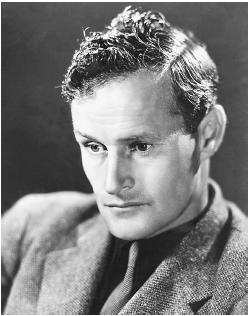
William "Wild Bill" Wellman. The Siren's pick until she was reminded of Welles' youth.

For the longest time the Siren refused to look up anything about the New York Times' Verlyn Klinkenborg because she preferred her imaginings of the man--essentially, Uncle Henry in Understood Betsy. There's Verlyn is in the parlor of a 200-year-old farmhouse in Vermont, having his niece or nephew read Sir Walter Scott by an oil lamp while he mends some tack (whatever tack is).
Well, Verlyn is actually a rather trim fellow and much younger than Uncle Henry, and his farm is apparently in upstate New York. The Siren is happy to report, however, that his taste in reading material isn't too far from Uncle Henry's. Verlyn's a Dickens man, something which always makes the Siren feel comradeship with a writer. And he loves Eliot, and he likes to re-read his favorites:
Part of the fun of re-reading is that you are no longer bothered by the business of finding out what happens. Re-reading “Middlemarch,” for instance, or even “The Great Gatsby,” I’m able to pay attention to what’s really happening in the language itself — a pleasure surely as great as discovering who marries whom, and who dies and who does not.
The real secret of re-reading is simply this: It is impossible. The characters remain the same, and the words never change, but the reader always does. Pip is always there to be revisited, but you, the reader, are a little like the convict who surprises him in the graveyard — always a stranger.
The Siren was struck, when reading these paragraphs months ago, at how you could easily substitute re-watching movies for re-reading books. The Siren wants to see some of the Oscar bait out this month (Up in the Air) and some of it she does not. (The Road--are you bloody well kidding me? I don't care how good it is, I am not doing cannibals for Christmas. And that goes double for Precious.) Well, the Siren would love to be one of those encyclopedic cinephiles who has seen everything, new and old (howdy, Glenn, Peter, Andrew, David and the whole sidebar gang) but she keeps running into the same secret, shameful vice:
She re-watches movies. A lot.
One of life's great pleasures for the Siren comes when, like a dolled-up old broad hitting the jackpot at the slots, she flips over to Turner Classic Movies and hits a well-loved film. Somehow it's better when it's random, and not the process of careful selection at the DVD shelves. There's a particular thrill to turning on a TV and finding a movie that suits your life or week or mood precisely, like Mr. Blandings coming on last week as the Siren unpacked, or White Heat popping up just when the Siren needed a shot of Cagney. And when you tune in to a scene you adore, it's like running into a well-loved friend on the street.
The holiday season is a good time for re-viewing, as you naturally hunger for familiarity and warmth. So, in the spirit both of confession and renewal, the Siren is naming, strictly in the order in which they pop into her head, 10 films she's seen about 10 times, and a favorite scene (or two or three). Some I've mentioned before, some I haven't, but you aren't going to find surprises on here. This isn't a list made to impress. It's made to make the Siren happy.
1. The Maltese Falcon: Chipping away at lead. "Well sir, what do you suggest? We stand here and shed tears and call each other names, or shall we go to Istanbul?"
2. The Thin Man: Myrna: You asleep?
Bill: Yes!
Myrna: Good... I want to talk to you.

(Not only does the Siren cherish this scene, she's played it.)
3. Citizen Kane: "A fellow will remember a lot of things you wouldn't think he'd remember. You take me. One day, back in 1896, I was crossing over to Jersey on the ferry, and as we pulled out, there was another ferry pulling in, and on it there was a girl waiting to get off. A white dress she had on. She was carrying a white parasol. I only saw her for one second. She didn't see me at all, but I'll bet a month hasn't gone by since that I haven't thought of that girl."
4. Rules of the Game: The hunt. Octave and Christine in the greenhouse.
5. Letter from an Unknown Woman: Joan, suddenly come back to life in Jourdan's memory, holding the gate for him once more. The Siren has probably seen this movie only about six times because it kills her but she's listing it anyway.
6. The Band Wagon. All of it, but I particularly love trying to figure out what "Louisiana Hayride" is supposed to be doing in the show within the movie. The most utterly incongruous number in the history of American musicals, if you ask the Siren, and that is some accomplishment.

7. Footlight Parade: My favorite 30s musical. Any scene with Cagney makes me happy.
8. Now, Voyager: Claude Rains. Bonita Granville at her bitchiest. "My mother. My mother! MY MOTHER!"
9. Twentieth Century: "I close the iron door..." (A catchphrase with an old boss of the Siren's.)
10. The Pirate: The "Nina" number. Such perfect Gene Kelly, in so many ways.

Oh, what the heck. It's the season of generosity. Here's 10 more.
11. My Favorite Wife: Cary Grant in the elevator. Irene Dunne laughing over the shoe salesman, with one little hand gesture to indicate the guy's height, and another for Cary.
12. A Night at the Opera: When the orchestra strikes up "Take Me Out to the Ball Game" the Siren falls over, every time.
13. Stagecoach: "Looks like I got the plague, don't it?"
14. Captain Blood: Some of the 1930s' most amazing eye candy, but the Siren's favorite is Basil Rathbone, lounging around that prison. Ah, Basil.

15. Shadow of a Doubt: Joe and Herb, discussing the perfect murder. The most obvious counterpoint in the world ("on the nose," in a popular phrase the Siren can't stand for some reason) but Hitchcock makes it perfect, building on their innocent chatter until you find it as unbearable as Charlie does.
16. Stage Door: Any time Eve Arden or Lucille Ball is on screen. "A pleasant little foursome. I predict a hatchet murder before the night is over."
17. All About Eve: Not mentioned much, because it isn't one of those famous barbs, but Sanders, purring to Barbara Bates: "Tell me, Phoebe, do you want someday to have an award like that of your own?...Then you must ask Miss Harrington how to get one. Miss Harrington knows all about it."
18. Mildred Pierce: "Not too much ice in that drink you're about to make for me."
19. To Be Or Not to Be: The Siren's favorite part of the running gag: "So they call me Concentration Camp Erhardt." "I thought you'd react like that."
20. Singin' in the Rain: Jean Hagen as Lina Lamont is a desert-island performance if ever there was one. "What do they think I am, dumb or something? Why, I make more money than Calvin Coolidge--PUT TOGETHER!"

That's all the Siren will allow herself, but if anyone wants to chime in with a few of their own, that would make her happy too. Consider it a gift.
 Today, Oct. 22, Joan Fontaine turns 90 years old. And this week the Siren intends to do her doggonedest to post as much as possible, and devote each post to Joan. There are precious few stars from the glory days of Hollywood who are still with us, and none are dearer to the Siren than Ms Fontaine. Can you guess why?
She was a delicate clinging vine in Gunga Din, one of the greatest of all 1930s action films. She was a teary-eyed, but still sympathetic "sheep" in The Women. She was Fred Astaire's first post-Ginger partner, in A Damsel in Distress. She was Hitchcock's first Hollywood blonde as the terrorized, given-name-less second Mrs. de Winter in Rebecca, the role Ms Fontaine believes most likely to keep her name alive with the public. She won an Oscar with her second film for Hitchcock, Suspicion, beating a roster that included her own sister, Olivia de Havilland. She was nominated for another Oscar for The Constant Nymph. She was the title heroine in Jane Eyre, opposite Orson Welles in one of his few outings as a romantic lead.
Any of this would merit a good long post from any classic movie lover, but for the Siren one reason towers above all. Joan Fontaine didn't merely give her finest performance in Letter from an Unknown Woman, which the Siren firmly believes is the greatest woman's picture of all time. Ms Fontaine also selected the Stefan Zweig story, developed the project with her then-husband William Dozier and was instrumental in hiring the great Max Ophuls to direct.
It just doesn't get much more impressive than that. If there were any justice in the world, they'd be altering the lights on the Empire State Building today for Ms Fontaine. As it is, maybe she is catching up with some of her lesser-known films on Turner Classic Movies today. As of now, the Siren plans to spend the week going through Ms Fontaine's career more or less chronologically, winding up with some thoughts on Letter. If you have the time or can get to your Tivo, do try to catch some of TCM's offerings. The Siren saw Until They Sail a while back, and though Ms Fontaine is hard on it in her memoirs, she is pretty good in it. Unfortunately the Siren won't be able to see Born to Be Bad, but Nicholas Ray directed it and if anyone catches it please let us know what you think. Also, if anyone else posts birthday tributes, drop the Siren a line via email or comments and she will link it up.
The Siren treasures her one tiny personal connection to Ms Fontaine. According to IMDB, she now lives in Carmel, California, but in the early 1990s she still maintained at least a part-time residence in New York City. In those days the Siren's roommate, Bill, managed a chic, high-end costume jewelry boutique on the Upper East Side. This store specialized in pieces that echoed real jewels sold in the legendary stores a few blocks away on Fifth Avenue. The ladies who shopped there were the sort who could throw on a little cubic zirconia and have everyone assume it was the real deal--with none of the insurance risk from taking the genuine sparklers out of the vault. Bill waited on a number of breathtakingly famous women, including Jacqueline Kennedy Onassis and Imelda Marcos. (Imelda didn't actually speak to him, communicating instead through her companion, a Mrs. Batista--prompting the Siren to wonder forever afterward if New York is home to some sort of Ex-Dictators' Wives Club.)
Anyway, Bill's favorite client was Joan Fontaine. She came in several times a year, still beautiful, always dressed in perfect taste, always warm and courteous and always picking out his favorite pieces. The Siren yearned to dash uptown from her office job and catch a glimpse of Joan, but alas, the rent had to be paid, and the Siren's boss at the time had this dreary insistence on one's bodily presence throughout the working day. (And he never went to the movies. Boy, was the Siren glad when that gig ended.) Every time Bill came home and mentioned Ms Fontaine had been in the store the Siren almost chewed her arm off with jealousy. Finally she made him promise that the next time the lady dropped by, he would at least mention his worshipful roommate.
So some time later, in comes Joan, glamourous as ever. Bill waited until he was almost done wrapping her purchases, then finally remarked, "You know, Miss Fontaine, my roommate is a big admirer of yours." A polite murmur of "how nice" or something from Ms Fontaine. He ventured further. "And she asked me to tell you that her favorite movie of yours is Letter from an Unknown Woman."
At that, Bill said Ms Fontaine lifted her head and gave him the most dazzling smile he had ever seen from her.
"Is it really?" she said. "Mine too."
 The Siren registers polite disagreement with Dave Kehr of the New York Times, and his review yesterday of new DVDs. I hope he didn't mean it when he said that the 1948 Anna Karenina and the double DVD set of the 1935 and 1952 Les Misérables were destined to sit "somewhere on a back shelf in high school libraries, to be shown whenever an English teacher feels like taking an afternoon off." Both releases have a great deal to offer film lovers.
The Siren saw that version of Tolstoy quite some time ago, and while Vivien Leigh could not compete with memories of Garbo in the same role thirteen years earlier, Ralph Richardson was a superb Karenin. It was also directed by Julien Duvivier, a fine talent who achieved greatness more than once with films such as Un Carnet de Bal and Pepe le Moko. As for Les Misérables, the Siren hasn't seen the 1952 version, though Robert Newton supposedly does a good job as Javert, and Lewis Milestone was no slouch.  But releasing the 1935 version is a genuine event, for it contains Charles Laughton as Javert, a role recorded at the pinnacle of his artistry. It's been darned hard to find for lo these many years, despite virtues such as cinematography by the great Gregg Toland. The director was Richard Boleslawski, a veteran of the Moscow Art Theatre whose role in bringing the Method to America led Simon Callow to call him "Moses, or perhaps John the Baptist." Laughton's wife, Elsa Lanchester (Madame Magloire in the 1952 version), thought it Laughton's finest performance. And Gloria, if you are reading this and you have a multi-region DVD player, Amazon has it for $13.99, and they ship to Spain. The Siren's copy is on its way.
Finally, a word about Orson Welles as Rochester in Jane Eyre (1944), also released this week. The Siren cheerfully acknowledges her own Welles worship, but she still thinks his performance has been short-changed. Rochester in the novel is a frequently menacing figure, who at first frightens Jane as much as he fascinates her. The Siren sees little similarity between Welles's Rochester, with his air of privilege and his acid sarcasm at Jane's expense, and Heathcliff, the half-wild, uncouth orphan, desperately in love with a woman he cannot have. (Perhaps the association comes from Laurence Olivier. He was mesmerizing, but he played Heathcliff throughout with an accent more redolent of the Old Vic than the stable.) Joan Fontaine did indeed play the spirited Jane a mite too close to Mrs. de Winter territory. But I would not call the novel's Rochester downtrodden, as Mr. Kehr does, not even at the end when, as Joyce Carol Oates wrote, "the blind and crippled Rochester is no less masculine than before." Rather than playing it safe, as a straight figure of romance, Welles brought out the neurosis in Rochester to a marked degree while retaining the arrogance of the aristocrat. That was a definite risk. As David Shipman put it, Welles "moved and looked the part, darkly romantic, but it was hard to believe that he wasn't as insane as his wife."
 It is a lonely thing, disliking Once Upon a Time in the West. Trawling through the vast store of critics' reviews compiled on IMDB yields approximately five thumbs down. The rest fall all over themselves to call this the greatest Western ever made. The Siren's own husband has already penciled in a date to see it with the kids when they're ready (in about ten years). One of my favorite film writers named his blog after Sergio Leone. (Dennis, please try not to hold it against me.) The film's reputation seems impregnable, and in questioning its greatness the Siren plays an exercise somewhat akin to lobbing a spitball at the Washington Monument. She is resigned to the idea that few, if any, will agree with her piece of contrarianism. She does hope, however, that for the time it takes to read this post, you will at least be able to see the movie through her eyes.
Instead of summarizing the plot, which is widely known and too murky anyway, the Siren will state why she dislikes this movie: It is overlong, badly acted, misogynistic and dull. Dear god is it dull. The movie is often compared to an opera, but the more apt comparison is oratorio--plenty of music, no scenery and no acting. The structure cycles through same, same, one minute of dialogue, gunfight, same.
Then again, Leone's camera doesn't seem to care if we ever get interested or not. Again and again we return to the basic pattern of long shot (flat, sun-bleached, not terribly interesting desert) to close-up (flat, sun-creased, not terribly expressive face), close-up to long shot. It has a sort of lulling rhythm to it, like walking through a gallery and turning your head from portrait to landscape and back again. But like the paintings in the gallery, it just hangs there. Leone is supposed to have choreographed OUTITW's performances to Morricone's pre-written, excellent score, but the tempo doesn't change much even when the music does. Certainly there are references to other filmmakers--better filmmakers--Fred Zinnemann with the opening train station sequence, John Ford with the build-up to the massacre, the funeral sequence borrowed from George Stevens. Some take that as a sign of the movie's greatness, but spotting those only irritates the Siren further, as it reminds her of other movies she could be watching. (She could, for example, watch High Noon AND 3:10 to Yuma in only slightly more than OUTITW's running time.)
Said it before, repeat it here--the grand unifying theme of Western movies is, "who's the man here?" OUTITW gives us two. The first is Charles Bronson. Actors do not usually become stars without some sort of star quality, and Bronson has presence, a great deal of it in fact. But Leone's preference for monumental performances, meaning the actors hold poses for beat after beat after beat while we are supposed to wonder what is happening behind those scrunched-up eyes, is catastrophic for Bronson. The Siren is not kidding when she tells you she prefers Bronson in Death Wish, where at least he gets to move. Here he seems preserved in amber, an actor who manages to overplay his lack of affect. That is its own form of odd accomplishment, but that doesn't make it moving. The second man, more by dint of blowing Bronson off the screen than the script itself, is Henry Fonda. The Siren often wonders how much of OUTITW's impact, then and now, is due to the stunt casting of Fonda. Holy moly, Wyatt Earp just shot a kid! How could Tom Joad be so mean? But is it surprising that a serious, stage-trained actor with a 40-year career behind him at that point could play a villain? Frank is a figure of pure evil, as such his character arc is more like a straight line, and Fonda's chief virtue is in refraining from the sort of hamminess Anthony Hopkins brought to Hannibal Lecter. Fonda, as always, walks softly. The shock from the against-type casting lasts about 20 minutes, and the movie is, of course, 165 minutes long. You have plenty of time to notice that Frank's villainy is no more fleshed-out or believable than hundreds of others, from Lee Marvin as Liberty Valance to Jack Palance in Shane. The difference is that those villains don't overstay their welcome, mostly popping onstage to punch up the action and heighten the stakes. Here you have to spend a long, long time with Frank, and he never gets any less or any more evil, nor does he get more interesting.
 If there is anything the Siren can enjoy about the movie, aside from the deservedly praised opening, it is Jason Robards as Cheyenne. He is so deliciously, cornball hammy he seems to have dropped in from another set. When he is on screen the movie does occasionally lurch to life, as when he pops up in a window, hanging upside-down from a railway car, wearing a marvelous expression somewhere between apprehension and glee. Unfortunately, many of his scenes are played with Claudia Cardinale.
 Ah, Cardinale as Jill. Misogyny irritates the Siren, but even more than misogyny she is irritated by those who try to gloss or dismiss the problem, for problem it is. OUTITW puts a woman in the middle of the action, gives her character great thematic importance, and then shows her behaving in ways that simply beggar belief. She's the whore with a heart of gold (heaven help us, and in 1968 yet), but more than that she is all appetite and survival instinct, only minimal brain. Jill is an animal shorn of even the small dignity of an animal's initiative. She spends the movie merely reacting to events. Kidnapped? Guess she better sleep with Frank. Railroad workers need water? fine, and because Cheyenne says so she'll let them pat her backside (one of the most bizarre assertions of workers' rights the Siren has ever heard). Bronson rips her dress? She falls in love with him. Duck? Fine, she'll duck. And whether deliberately or inadvertently, Leone cast an actress who was unable at any point in her screen career to suggest much of an interior life for even a well-written character, as in The Leopard. In Visconti's masterpiece, this most beautiful of actresses can mime the charm of a young girl only by waggling her shoulders a great deal and biting her lower lip at strategic intervals. Here Cardinale mostly holds her head still (thank God for that small favor from Leone's techniques) but reverts again and again to the same lips-slightly-parted stare, as the audience wonders whether false eyelashes and Cleopatra liner were around in the 1880s.
Here the Siren returns to the mystery of talent, and why some actors can project things to the camera that others simply cannot. Garbo, whom Orson Welles flatly called "stupid," could stare into the distance and take the audience on a journey through all the ages of Woman, as we pondered what lay behind that beautiful face. Cardinale's beauty is no less stunning, and yet as she looks into the camera you suspect she is trying to recall whether she left the hot plate on in her trailer. Well, perhaps Garbo could have breathed substance into Jill. But the Siren doubts it.
In his better movies (though the Siren has reservations even about those), Leone choreographs the set-up for violence fully as much or more than the violence itself, such as the justly celebrated final shoot-out in The Good, the Bad and the Ugly. The Siren doesn't mind the lack of realism in this; as she has said before, realism is a style like any other, and an overrated one, at that. But here Leone just does not know when to stop. I will accept two men circling one another for a final confrontation, sizing one another up like dogs and spitting. I will accept them doing it for a longer time than any two armed men probably ever did in the history of the Colt 45. But when they do it for a quarter-hour--and stop for a flashback to boot--it becomes ludicrous. You might as well bring in Russ Tamblyn and George Chakiris and let the characters dance it out. Furthermore, the impact of this, the final confrontation, is lost because this is how ALL the confrontations in the movie have played out. We have been watching menacing poses for two and a half damn hours. A few more just aren't that interesting.
The theme of OUTITW is the bloody track of the railroad, and how it brings the tough-hombre era to an end even as it brings more exploitation. Leone correctly grasps that the idea of space--that, like Huck Finn, you can always light out for the territories--is a big part of our fascination with the push westward. The director's other idea, here as in his Dollars trilogy, is to strip away the myth that out there was something good or noble, and show that greed and violence built the West. He was hardly the first to do that, but he was one of the most thorough. Trouble is, Leone takes every traditional aspect of the Western and, rather than building on it, either mocks it or replaces it with relentless, dour pessimism. So when the end credits roll at long-bloody-last, all you have is a funhouse reversal of Roy Rogers. Once Upon a Time in the West is, finally, as predictable in its darkness as Rogers was in his eternal goody-goodyness.
(This post is offered as part of the Contrarianism Blog-a-Thon sponsored by Jim Emerson at Scanners.)
 Orson Welles was playing the Narrator in Start the Revolution Without Me, and I wanted to meet him. He only had two filiming days, and I thought it would be more polite if I waited until the second day to say hello. On the second day, at about three in the afternoon, I got to the chateau where they were filiming; Orson Welles was gone. I asked [Revolution director] Bud Yorkin what happened.
"Well," Bud said, "we'd start a scene, and after a little while Orson would call 'Cut!' He'd look at me and say, 'Now, you don't honestly want any more of that shot, do you, Bud? Surely you'll be cutting to the twins at that point.' And I'd say, 'Yes ... well ... yes, I suppose so.' Then we'd be in the middle of the next scene, and he'd yell, 'Cut!' and he'd say, 'Now surely you've got to cut there, Bud--it wouldn't make any sense if you didn't cut to the mob at that point.' So we finished shooting all of his sequences an hour ago."