Last night the Siren attended a swell dinner marked by good conversation, good wine, and the best damn roast chicken ever. Since the guests included a number of film writers, naturally the discussion long lingered over the most esoteric, enlightening and intellectual corners of film love...
But after a while we ditched all that and got down to brass tacks: Who was the best-looking director of all time?
We didn't come up with many names. One host ventured that the last time he broached this topic, the one most often mentioned was Francois Truffaut. Well, the Siren loves Truffaut's movies--a lot--but, nah. Then the Siren got up this morning and remembered all sorts of names, most them not mentioned last night.
Thus this mischievous exercise in the most superficial kind of auteurism imaginable.
Frank Borzage
John Cassavetes. How on earth did we forget him?
Vittorio de Sica
Joseph Mankiewicz (on right). Numerous affairs included Linda Darnell, Judy Garland, Joan Crawford and Loretta Young.
Leo McCarey. Frequently cited as a huge influence on Cary Grant's screen persona.
Vincent Sherman. Had affairs with Bette Davis and Joan Crawford. Lived.
Luchino Visconti
Raoul Walsh. Pre-eye-patch Walsh, in full Mexican bandit regalia, was our host's pick.
Orson Welles. The most beautiful depraved baby face of all time, and as a bonus, you get that voice. Precisely the kind of voice you want to hear saying, "Good morning."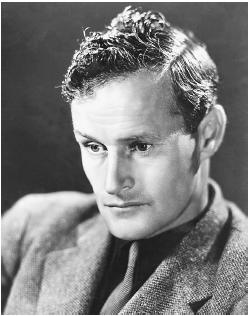
William "Wild Bill" Wellman. The Siren's pick until she was reminded of Welles' youth.

It's been a slow couple of viewing weeks chez Siren. She's had a hard time finding quiet periods to watch things, for one. And for another, what she has seen hasn't exactly brought the Muse sashaying over to her computer keyboard. There were a couple of John Garfield movies, Out of the Fog and Saturday's Children. Out of the Fog had Garfield in delicious bad-guy mode, Ida Lupino looking glorious and James Wong Howe making Sheepshead Bay look the way it should look but undoubtedly never did. Still, no inspiration. Saturday's Children had some lovely, delicate moments in the early scenes but slipped later.
There was The Hucksters, deeply disappointing to the Siren, although Sydney Greenstreet hauling off and spitting on a conference table was an unexpected fillip. But Greenstreet, despite the Siren's deep love for the man, was woefully miscast, Gable failed to charm and Ava Gardner's hairstylist must have had it in for her. Deborah Kerr looked ravishing but her part was wan. The movie looked pretty good but was ultimately toothless; maybe if the Siren watches Mad Men again she will now appreciate it more.
Saw Nightfall at the Film Forum, and a good thing too, since its ravishing beauty (via Jacques Tourneur and Burnett Guffey) needed a big screen. But the plot was preposterous in ways both big and small. Saw Cyrus (oh look! a new movie!) and it had some funny moments, but Marisa Tomei's character was frustratingly underdeveloped and the out-of-nowhere constant zooming made the Siren want to gently take the directors' hands off the camera and hand them some worry beads.
Then there was a Frank Borzage night at the home of some dear friends, where we saw Doctors' Wives, an intermittently interesting early work that the Siren has little to say about, and Young as You Feel, a ghastly relic that the Siren cannot recommend even to ardent Borzage completists. There were three shots where she thought she spotted Borzage; otherwise the only sustaining moments came when the Siren's couchmate (He Knows Who He Is) dissolved into inadequately suppressed giggles every time Will Rogers described himself as "an old meat-packer." That sent the Siren into fits as well and she ended the evening with her Serious Classic Movie Viewer cred in tatters.
Hence the radio silence.
Some weeks back we held a belated house-warming and the Siren shut the door to the hall closet where we had piled all the things we didn't know what to do with, like toolboxes and an old bureau and papers to shred and all the pictures we haven't hung because we don't want to face the inevitable debates: "I hate that one." "I hate THAT one more." "Hey, that was a gift." "Oh, a gift, huh. From who? a sworn enemy?" The door to the closet is right next to the bathroom and during the party the Siren kept one eye peeled to make sure no one opened the wrong door and discovered the secret of our Potemkin housekeeping. Since then, the Siren opens the door from time to time, looks in and says to herself, "I ain't touching this shit," and shuts the door, suddenly gripped with the strong desire for a stiff Scotch.
Well, it's only 9:30 am right now and besides, the housewarming guests drank up all the Scotch and it hasn't been replaced. (That isn't a reproach, guys; we had fun doing it.) So the Siren brewed a cup of nicely smoky lapsang souchong and decided to clean out her computer files instead. The Siren wouldn't show you that hall closet's interior if you came over with an armful of gardenias, a sonnet to her left eyebrow and a large bottle of 30-year-old Talisker. But herewith, because her Scots-Irish ancestral blood deplores waste of any kind, and because otherwise the cupboard is bare, a glance at some of the unfinished fragments that have been lurking on the Siren's hard drive.
Here we have the notes for Siren's abortive stab at a comparison between Criss Cross and Touchez Pas au Grisbi, two movies that she saw back-to-back and that still strike her as complementary.
Oddly, it was the French film that ultimately had a less cynical outlook, holding out the possibility of loyalty and even love. Yvonne DeCarlo speaks for the Americans when she snaps at Burt Lancaster: "Love, love! You've got to watch out for yourself."
Criss Cross is even better than The Killers, one of its predecessors, at least in part because of DeCarlo. Her beauty is just lights-out, on a level with the earlier film's Ava Gardner. Unlike Gardner, however, DeCarlo really acts in this movie. She is very good as Anna, Lancaster's ex-wife, showing us a woman who may have some good qualities deep down, but meanwhile is out for herself. Burt Lancaster's magnificent looks help his portrayal of Steve who is, it must be acknowledged, a bit of a drip. Steve takes up a lot of his narration blaming fate, when we can see he's the author of his own misfortunes.
Both of the movies flip sex roles--Steve the drippy romantic, Anna the practical hustler; Gabin the loyal mate, his partner the feckless damsel-in-distress.
Jeanne Moreau really, really, really cannot dance. DeCarlo, on the other hand, tears up the floor.
The opening graf of a planned post on the splendid The Late George Apley. If this one pops up on TCM, by all means watch it.
It has a dry, witty script by Philip Dunne and a wonderfully funny performance from Ronald Colman whom, as her readers know, usually hits the Siren like a big ol' dose of Nyquil. Mr. Siren, who was in the same room trying to beat an external hard drive into submission, at one point looked up and remarked with mild irritation, "You're laughing a LOT at this one." He would have had a much better time just watching it with me.

This is an excellent example of a post the Siren abandoned because she was being entirely too pissy. And no, she won't tell you who it was who aroused her ire, and there are no prizes for a correct guess, either.
Dude ... Stage Door?
There are I-don't-know-how-many actresses and films out there to illustrate your thesis that everything was so much better without feminism, and you choose--Katharine Hepburn in Stage Door?
Okay, don't let me stop you. Maybe next week you'll follow up with how things in Hollywood were a lot better before they invented panchromatic film. I want to be sympathetic here, because I happen to prefer old movies myself. Hence my blogging about old movies. And of course it is a truism that you are entitled to your opinion. But thematic evaluations are supposed to be rooted in something, preferably something connected to the movie. You can't just watch Bringing Up Baby and decide it's all a metaphor for the Boer War.
Yes, we are all better off without that one. It was only going to get worse from there.
Here, to close out this collection of unrelated fragments, are the Siren's notes on My Last Breath, as her British edition titles Luis Buñuel's autobiography.
The book is, surprisingly, in rough chronological order but Buñuel still meanders from topic to topic, detouring for a while and then swerving back onto the road. He was born in the Aragon region of Spain in 1900, at a time when the area was poor and the peasants still lived in much the same way they had for centuries. His father was relatively well-to-do, however, and Buñuel received a good Jesuit education, right up to the day he was expelled, much to the Siren's relief. (Come on, this is Buñuel. You don't want to hear about him being a complete altar boy, do you?) He went to Madrid in the 1920s to be educated at the university, and there Buñuel seems to have met everyone who was anyone in Spain at the time, from the young Garcia Lorca and Salvador Dali to King Alfonse.
He started out studying insects and claims he could recognize and give Latin names for many well into his old age. Eventually he switched to philosophy, but then he moved to Paris. There he made the revolutionary Un chien andalou and L'Âge d'Or, the latter film distinguishing itself by being the first Buñuel to be banned (for about fifty years, as a matter of fact).
In the same way that Buñuel's films can focus on seemingly extraneous details (in The Discreet Charm of the Bourgeoisie, people going on and on about their dreams, as Bunuel does here) and exclude the information you are dying to know (what, exactly, happened to Don Jaime's wife in Viridiana?) the director gives one chapter apiece to his most prolific years as a filmmaker, in Mexico and in France. He is happy to give you a recipe for a Buñueloni (the Siren would love to order one of these at her next blogger outing) but doesn't want to tell you much about, say, Gerard Philippe.
So now we've used up some leftovers. There's about a half-dozen more lurking around, but the Siren promises she won't drag those out until the next time she's just seen a Will Rogers movie and is stumped for material.
If you've seen anything brilliant lately, by all means, tell.
Update: In a nice coincidence prompted by TV5's showing Grisbi last night (Mr. S watched too), James Wolcott posts about the Becker film. The dancing amused him too. Even funnier: Jacqueline Susann's Once Is Not Enough, which may well be playing on a double bill with The Oscar in some midnight-camp-palace of the afterlife.
And the in-depth take on Nightfall that the movie deserves, from Kim Morgan, at Noir of the Week. The Siren was still not keen on the woozy plotting, but Kim points out all the brilliance that made the Siren pretty much love the thing anyway. And Simon Abrams at Slant Magazine liked the movie less than either Kim or me, but makes his case very well (Simon has particular problems with the ending).

The Siren has been tagged several times, but (she believes) first by Tony Dayoub, for a meme about books that have influenced her view of the cinema. At first, the Siren thought, that's been done. Sheila O'Malley's shelf-by-shelf descent through her enormous film-book library is a hard act to follow. Still, the Siren went over to her own haphazardly organized shelves and began to get quite nostalgic over the books she read years ago. So she decided to attempt to reconstruct a small part of her early film-book reading pattern, where she went from just watching movies to wanting to read about who made them, and how, and when, and why. This is not a heavyweight list. It is more akin to stopping into a children's bookstore and saying, "I remember that! I even remember what I was doing when I read it!" But the Siren has always found that the books you read as a youngster stay with you the longest.
So then, roughly in the order that the Siren encountered them, 10 books that shaped my view of the cinema. Herer are the first five books, with the next five to come:
Vanity Fair: Selections from America's Most Memorable Magazine, ed. Cleveland Amory and Frederick Bradlee.This wonderful book, firmly out of print but available on the Web for little more than the price of postage, is full of beautiful images from the magazine's first incarnation, which ran from 1914 to 1936. The Siren spent hours decoding the witty articles like messages from a lost ship--which, in a way, they were. Since this was well before the Internet, it sometimes took years to find out what they were talking about. Who, for example, was Doris Keane?
Long before Graydon Carter or Twitter ever came on the scene, the magazine was in the habit of handing notepads to celebrities and asking them to come up with thoughts, for example, on The Ideal Woman. And, further to our digression on Ruby Keeler, perhaps my readers would like to see what Al Jolson had to say on that matter. Read it and see if you don't appreciate Ruby a little more for sticking it out for 12 years:
1. The gift of stretching a can of sardines into a banquet.
2. A thorough dislike of all actors--save one.
3. An appreciation of the fact that, in all the important affairs of life, and in the trivial ones as well, I am, for some curious reason, invariably RIGHT.
4. A disinclination to be taken out--unless she had bid 'one club.'
5. A hearty laugh for all my jokes, including the very old ones.
6. A loathing for crossword puzzles.
7. An inability to block a straight left. [!!!! -The Siren.]
8. Complete ignorance of the existence of the Lucy Stone League.
9. A million dollars.
10. A cough.
Many were the photographs that filled the Siren with desire to see the subject's movies. Like this one, which along with Queen Christina sparked a lifelong love for Garbo:

Or this one, which prompted the Siren to pick up Sunshine and Shadow, Mary Pickford's autobiography.

Pauline Kael in the New Yorker. I could cheat here and cite 5001 Nights at the Movies, but in truth I didn't get that book until much later and I have been missing my copy for years--probably wound up with an ex-boyfriend. My father subscribed to The New Yorker and my favorite section was the front, where I could get all manner of intriguing capsules about movies I had already seen and movies I wanted to see. I didn't agree with Kael all the time (who does?) but she opened my eyes to so many directors and so many movies. Like this one below, chosen just because the title leaped out at me at this site:

Paths of Glory. Just after he made his racetrack robbery picture THE KILLING, Stanley Kubrick directed this version of Humphrey Cobb's novel, photographed in Germany. It is not so much an anti-war film as an attack on the military mind. Some of the press went all out for it ("searing in its intensity," and that sort of thing), but it wasn't popular. The movie has a fascinating jittery quality, especially when Timothy Carey, who's like a precursor of the hipster druggies of the 60s, is on the screen, and the strong, liberal-intellectual pitch makes it genuinely controversial, though it was certainly easier to be anti-militaristic in a film (made in peacetime) set during the First World War than it would have been in a film set during the Second World War. The story is about the class structure within the French army--the aristocratic generals in their spacious, sunlit châteaux and the proletarian soldiers in the dark trenches; trapped between them is Colonel Dax (Kirk Douglas), who commiserates with the men but is powerless--he carries out the orders of the high command. When the soldiers refuse to fight in a battle that is almost certain death, three of them are selected to be tried for cowardice; Dax has the task of defending them. The film's rhythm is startling--you can feel the director's temperament. And there's an element of relentlessness in the way he sets out to demonstrate the hopeless cruelty of the "system." (The film was banned in France for some years.) It's an angry film that seems meant to apply to all armies. Watching it is very frustrating: Kubrick, who wrote the script with Calder Willingham and Jim Thompson, doesn't leave you with anything. He must have felt this, because he tacks on a scene at a cabaret, with a German girl (Susanne Christian) singing and the soldiers singing along, as they weep. (It just makes you uncomfortable.)
The Siren most emphatically does not agree with everything in that capsule--for one thing, I couldn't disagree more about the film's ending. Other parts engender the same "Yes, BUT..." reaction that I often have to Kael's criticism. But Kael made me want to see the movie, and she made me want to think about the movie, and she made me yearn for an intelligent conversation about the movie. And that's just one of thousands. Years later I can still remember phrases from both her capsules and her long reviews. Not many critics can expect their writing to be that fresh, that provocative, that memorable long after they have died.

Scarlett Fever by William Pratt, including the collection of Herb Bridges. This picture-packed (but alas, entirely black-and-white) book about Gone with the Wind helped spark the Siren's interest in movie-making, as opposed to just movie-watching. It could be a model for other fan books. There is a long section about Margaret Mitchell, the writing of the book and its stupendous success, but the Siren liked the movie sections the best. Pratt goes back through the filming records and shows almost day by day how GWTW was shot. He details the alterations made during filming, and the rationales for them. There are many on-set photographs, a whole series of test stills of Walter Plunkett's costumes, sketches from William Cameron Menzies, pictures of Ernest Haller at work, and many other details on the movie, from rights purchase to Atlanta premiere, all the way up through re-releases. You get all the directors, including a rundown on which bits George Cukor did, which scenes were shot by Victor Fleming and which were shot by Sam Wood. Pratt even introduced the Siren to such cinephile controversies as aspect ratio, describing misbegotten re-releases in widescreen that cut out part of the image. There's also a huge (maybe too huge) section on Herb Bridges' collection of GWTW memorabilia. Pratt eschews gossip; you will find none of the rumors about Cukor's departure, just a rundown on his "script differences" with David O. Selznick (which appear to have been real enough). But since reading this book, the Siren has read a lot more about Selznick, Vivien Leigh and all the others involved in Gone with the Wind, and has found very little to criticize in terms of Pratt's accuracy. In fact the book politely sets the record straight on a number of matters, Pratt shaking his head gently over such howlers as Bosley Crowther asserting in The Great Films that Victor Fleming died during production. Interpretation is another matter, and the book's most serious flaw is that it barely touches upon the controversies that surrounded GWTW from the moment of the book's publication. Still, this was one of the best Christmas presents my parents ever got me.

Lulu in Hollywood by Louise Brooks. Another Christmas present, and my introduction to Louise Brooks, whom I met as a writer long before I met her as Lulu. Brooks could really write, and this is another book that still has phrases rattling around in the Siren's head. The Siren recommends reading this slim volume of essays alongside Barry Paris's biography of Brooks, because some of her writing bent the facts to her particular viewpoint--the most notable example, according to Paris, being the "Gish and Garbo" essay. Which lends a whole different layer to beautifully executed passages like this one, from her essay on W.C. Fields:
The tragedy of film history is that it is fabricated, falsified, by the very people who make film history. It is understandable that in the early years of film production, when nobody believed there was going to be any film history, most film magazines and books printed trash, aimed only at fulfilling the public's wish to share a fairy-tale existence with its movie idols. But since about 1950 film has been established as an art, and its history recognized as a serious matter. Yet film celebrities continue to cast themselves as stock types--nice or naughty girls, good or bad boys--whom their chroniclers spray with a shower of anecdotes.
The Great Romantic Films by Lawrence J. Quirk. This one I bought for myself with babysitting money on the strength of a cover shot from Wuthering Heights, with which I was slightly obsessed at the time. Lawrence J. Quirk, nephew of the legendary Photoplay editor James Quirk, has written some 30 Hollywood books but the Siren loves this one for two reasons. One, the romantic melodramas it covers are often given short shrift by "Great Film" tomes. And the films that do get a fair bit of serious critical attention (Letter from an Unknown Woman, All That Heaven Allows) are often analyzed from an angle that assumes the romantic and emotional trappings are fripperies to be stripped away to reveal the "real" themes underneath. Quirk passionately believes that the sentiment in these films is part of what recommends them, and needs no apology. The Siren agrees with him. Second, the Siren loved this book for the huge variety of films the writer chose, everything from the obscure (speak up--who here has seen The Life of Vergie Winters?) to the eternally popular (Now, Voyager) to the head-scratcher (the Siren is still trying to figure out what Teorema was doing in this book, although Quirk gives it a thorough write-up). The Siren has spent years trying to see all of the films discussed here; she has about eight left, including Vergie Winters, Only Yesterday, Lydia, the 1932 Smilin' Through and The Music Lovers.
Quirk's definition of romance is a broad one, encompassing mother love and friendship as well. Here is Quirk describing No Greater Glory, the intensely moving Frank Borzage film that the Siren finally saw this year. Quirk sees no need to justify, or indeed even take note of, those things a modern audience might find hokey. He takes the movie on its own lyrical terms:
Young [George] Breakstone's Nemecsek tags after a gang of boys who wear uniforms and run their lumberyard playground like a military post. Heading the gang is Boka (Jimmy Butler), a handsome, stalwart little fellow who is idolized by Nemecsek and whose approval he constantly seeks. But Nemecsek is an outcast; he is frail and delicate, inept at the assorted skills the others regard as mandatory. The impatient, barely tolerant Boka is forever consigning him to his black book for shortcomings and minor ineptitudes. The only "private" in an army of "officers," Nemecsek is held in contempt and condescension for his failure to cope in physical and coordinational terms, although in the actualities of his soul he is a martyr and visionary in the making, the one pure soul of the lot.
(Part 2 to follow...)

The Siren is giving up on commenting at Big Hollywood. She likes to pounce occasionally on threads about movies she likes, but as noted by one critic who also quit commenting (because he kept getting deleted, bless him), "aw, nobody wants to play with Campaspe." Not a creature was stirring--nothing, no action. Dullsville.
So anyway, Mildred Pierce. Great movie that prompted a commenter to recall an alleged feminist interpretation wherein Mildred is "punished" for daring to step outside her assigned gender role and pursuing a career. The idea that Mildred is punished doesn't jibe with the Siren's viewing; instead, the "happy" ending where Mildred goes off with the drip she was married to at the beginning of the movie just indicates that in Hollywood at the time, if you wanted a happy ending you had to have the heroine go off with someone. Anyway, the marriage roles are a sidelight in the movie, as the Siren pointed out in the following comment. Maybe one of her patient readers would like to respond.
I don’t think Mildred Pierce has much to do with marriage and wifehood at all. James Agee was one of the critics who pointed out that the movie is much more focused on class, social climbing and attitudes toward money. Mildred’s moral unraveling becomes worse even as she gets richer. The really subversive part isn’t Mildred going to work, which she does out of necessity and abandons when she’s able, after finding a rich partner and a higher station. It’s the movie’s fisheyed look at maternal sacrifice. Instead of being beatific and ennobling, as in Stella Dallas, mother love is perceived as unhealthy, obsessive and narcissistic in the fullest sense of that word. Veda is a sociopath, but it’s Veda whom Mildred really loves, more so than any man in the movie and more even than the angelic Kay. “Don’t tell anyone what Mildred Pierce did!” could mean covering up a murder, but in the end it’s the unanswerable question of whether Mildred’s love “did” something to Veda and created this monster, or whether Veda (with the very name and spelling connoting “venal”) was what she was from birth. Mildred’s independence at the end, such as it is, results from her having taken Eve Arden’s joking advice and “eaten her young”–finally (and reluctantly) leaving Veda to her fate. Although, so tied to her dreadful offspring is Mildred that I’ve always wondered if Veda was able to work more machinations on her mother even from behind prison bars. Veda would fit in well in Caged.
And...Jack Carson is pure joy in this movie, as is Arden, who is the movie’s example of a woman happy and secure in herself–and single.
(The above photo is from Legendary Joan Crawford, a beautifully maintained site which has the most awesome collection of Joan Crawford photographs on the Web, bar none. You could spend hours there--I have.)
P.S. Please run over to The Auteurs, where Glenn Kenny has a weekly column about Foreign-Region DVDs. This week's item was requested by the Siren, and he delivers: a write-up of the Frank Borzage-directed, Ernst Lubitsch-produced Desire, which has been released in the U.K. Go, read and see if the screen-caps alone don't explain why the Siren mentions this every time the subject of "not out on Region 1" comes up.

The Siren is honored to be the subject of this month's Behind the Blog feature at Film in Focus.
She is still working on more things Bennett but fate has intervened in the form of a truly rotten disease. Mr. C keeps insisting it's a cold, the Siren firmly believes it's pneumonic plague. In the meantime the Siren has been tracking the effects of congestion on her voice. Sunday she started out very basso profundo and Tallulah-like. Monday she met Dan Callahan for a screening of Doubt (verdict: Streep terrific, rest of film not bad) and the Siren found her voice had developed a squeak in the upper register, like Jean Arthur. Wednesday was Harpo Marx day--basically no voice at all. Thursday and today, Lizabeth Scott territory.
Anyway, on to this week's anecdote and some links. The Siren was originally going to do an excerpt from Louise Brooks's Lulu in Hollywood, for its touching paragraphs about the doomed middle Bennett sister, Barbara. But after throwing such gloom over the place with her biographical sketch of Constance, the Siren really couldn't do that to her readers. So instead, here are Richard Griffith and Arthur Mayer, from their splendid (but, alas, out-of-print) The Movies, describing Constance's early career in what they dubbed "confession" movies:
Constance Bennett had the most screen offspring (with Joel McCrea usually fathering them, so that it was no shock to the movie public when they beheld in 1933 a title credit which read: "Constance Bennett in Bed of Roses, with Joel McCrea"). Miss Bennett's children came in handy for many plot purposes, including breach-of-promise suits, marriages in name only, and the foreswearing of promising careers. [Click to enlarge the Griffith and Mayer photo montage of Constance's usual romantic trajectory, above.]
Glad tidings. Turner Classic Movies is running two hard-to-find sound-era Frank Borzages on January 12. First, at 7:15 am EST, is Big City from 1937, with Spencer Tracy and the Siren's beloved Luise Rainer, who will turn 99 years old that day. The rest of the day's programming is given over to Rainer, including rarities like The Emperor's Candlesticks and Toy Wife.
But the real joy comes in the evening, as at 8 pm, TCM is showing No Greater Glory, which the Siren had listed as a "dying to see" some time back. Set the clocks, turn off the phones, ship the kids to their grandmother for a day or two, and the spouse too if you must, but that film really is an essential.
Meanwhile, David Cairns has now finished his series on Frank Borzage. Given that this great director and his frustratingly difficult-to-find movies are a constant subject in the Siren's comments, she urges you all to go to this link and read all of the posts.

Speaking of "dying to see" movies--Marilyn Ferdinand has a very detailed and fascinating post up on Only Yesterday, the seldom-seen debut movie of the great Margaret Sullavan. A must-read.
Noel Vera has a terrific post about the reactions he got when he showed three films--Zhang Yimou's Not One Less, Isao Takahata's Grave of the Fireflies, and Yoshifumi Kondo's Whispers of the Heart--to some young American students.
The Siren has long since gotten over her childhood love affair with the Three Stooges. Sorry Ivan, I know you love them, and so does Raymond de Felitta. But no matter what your opinion of the Stooges, Raymond has put up one fascinating post, about Curly and the real, and fake, Shemps.
The Siren never wants to have another discussion of Roman Polanski: Boiling Oil, or Absolution? But she could talk about Chinatown all day. Anyone with doubts about that movie's mastery needs to look at Pilgrim Akimbo's post, Chinatown and the Rule of Thirds, which uses screen shots to show the classical perfection of John Alonzo's cinematography.
Stinky Lulu put up her A-Z Meme and it rocks, of course. But boy, do you ever want to check out Lulu's writeup of Susannah York in They Shoot Horses, Don't They? Fabulous. I only hope Kim Morgan saw it. And also do not miss Lulu's breakdown of the Best Supporting Actress Race for 2008, including such timeless questions as whether "the cutest nun" has a real chance this year.
And we end with Jonathan Lapper asking, why should we automatically think of an unhappy ending as more authentic?

So, Dennis Cozzalio of the splendid Sergio Leone and the Infield Fly Rule tagged me with this "12 Movies I Need to See" meme. Now, as I understand it, the original meme was supposed to be about movies that you wanted to see, but could not locate, perhaps in the generous supposition that you've seen all the important stuff that's available. Well, there's a lot the Siren hasn't seen. It is, to be blunt, fucking embarrassing, some of the movies I haven't seen. The biggest gap: no Robert Bresson. Nary a film. You can all log off right now.
But rather than indulge in my own form of Cinematic Humiliation, à la David Lodge, I decided to combine this with another occasional meme from my beauty-blogger pals. This is called the Use It Up Challenge. If you're a beauty-product junkie, you always wind up with a bunch of half-used stuff abandoned in the back of your medicine chest or vanity case, waiting patiently to be taken out and played with again like so many cosmetic Velveteen Rabbits. The Use It Up Challenge asks you to take out the stuff, use it up, recycle the containers and move on with your life. It's a very good thing to do. (Although it has risks. In trying to use up one Serge Lutens perfume, an extraordinarily pungent jasmine scent called A La Nuit, the Siren succeeded in putting herself off jasmine for almost two years.)
So when this homework assignment came up, the Siren's head immediately swiveled from her computer screen to her DVD shelf, and the group of discs she still hasn't watched. It's a diverse and poignantly large group. Poor little guys. They don't ask much, just their chance to strut and fret upon the screen, and instead the Siren keeps tuning into her TCM addiction or her Netflix discs or Netflixing old Columbo episodes (Columbo is what I do for stress, instead of hard liquor) or popping into other people's blogs.
There are the DVDs that the Siren bought, unwrapped and hasn't watched yet, and those are bad enough. But the ones that really reproach her are the unseen movies sent by friendly bloggers. These wonderful guys went to all that trouble, and still I haven't watched. What's wrong with me? I guess I procrastinate a lot. I'd tell you for sure, but I won't be able to ponder it until a bit later in the week.
So here's a list for the Siren's "12 I Haven't Seen, So Use Them Up" Challenge. I am starting this with a handicap, in that I still haven't purchased a DVD player. I'm having a bit of Consumer Anxiety, trying to decide what to get. As soon as this is rectified, however, I am going to watch 'em all, and post at least something brief as I periodically check them off the list.
The first three were received via the kind offices of Mike P., the movie brain known as Goatdog.
1. Heroes for Sale (William Wellman, 1933) Sent to me after I was wowed by Wild Boys of the Road.
2. The Constant Nymph (Edmund Goulding, 1943) Sent to help complete my Joan Fontaine viewing. I read the book as a girl and perhaps that's why I have put it off--it's a tearjerker, if it follows the original story.
3. Christmas Holiday (Robert Siodmak, 1944) Sent because of my kind words for Deanna Durbin. I wanted to schedule this for Christmas but I seem no more capable of watching a Christmas movie at Christmas than I am of finishing all my shopping by Thanksgiving weekend.
The next four came a long while ago via Peter Nelhaus:
4. Blue Swallow (Jong-Chan Yun, 2005) Sent to shore up my shaky Korean film knowledge, without my having to watch someone get tortured.
5. The Curse of the Golden Flower (Zhang Yimou, 2006) Sent because he knows I love both director and star (Gong Li).
6. Exiled (Johnny To, 2006) See #6 (although maybe someone does get tortured in this one, I'm not sure).
7. Letter from an Unknown Woman (Jinglei Xu, 2004) With this one I think I'm just afraid of the comparison to the Ophuls.
This next was received via David Cairns's Duvivier Giveaway.
8. La Fin du Jour (Julien Duvivier, 1939) I will have to get another multiregion to watch it, I'm afraid, but I really want to.
This one was given me ages ago by Girish and somehow I never watched it.
9. The Marriage Circle (Ernst Lubitsch, 1924) God I suck. Why haven't I sat down for this one? It's Lubitsch, for crying out loud.
This one was sent by Flickhead:
10. A Talking Picture (Manuel Oliveira, 2003) Sent because he's a mensch (don't tell him I said so) and because I expressed admiration for Je Rentre à la Maison.
These two were purchased on Glenn Kenny's say-so:
11. L'Argent (Marcel Herbier, 1928) Glenn swore you can read the intertitles with limited French. Let's hope he's right.
12. Make Way for Tomorrow (Leo McCarey, 1937) Actually, this was purchased on the entire blogosphere's say-so.
As a bonus, to keep with the spirit of the original challenge, here are twelve I dearly want to see, but am having the devil of a time finding:
1. No Greater Glory (Frank Borzage, 1934) Of course there's a Borzage. There's always a Borzage. This one is an antiwar allegory based on a novel by Ference Molnar. It's lovingly described in Lawrence Quirk's The Great Romantic Films. (Quirk's volume was one of my first movie books ever and to this day I use it as a reference. If Wikipedia is right, he's about 75 now, and one day I'd like to meet Mr. Quirk and tell him how much his serious exploration of this type of movie influenced my instinct to take them seriously as well.) No Greater Glory is one of the few Borzage movies that doesn't depict a couple's romance. Instead the focus is on the war games played by feuding groups of boys in a lumber yard, and one misfit boy's (George Breakstone) yearning for love and acceptance from his group's leader (Jimmy Butler, who in a painful irony was killed in action in France in 1945).
2. So Red the Rose (King Vidor, 1935) My father preferred this Civil War movie to Gone with the Wind. Dan Callahan's Senses of Cinema article on King Vidor (do click, Dan is worth reading on any topic) says the movie portrays slavery in a far more complex way than Selznick's opus, which might explain why it failed at the box office. It was such a complete disaster, in fact, that no one would touch a Civil War movie for a number of years afterward. Not available in any format.
3. Only Yesterday (John M. Stahl, 1933) Margaret Sullavan in a loose adaptation of Letter from an Unknown Woman. People who have seen it are unanimous in praising it. Apparently stuck back in whatever hidey-hole Fox has put a bunch of other Paramount movies.
4. The Crash (William Dieterle, 1932) Ruth Chatterton was a remarkable actress, stage-trained but perfectly in tune with the camera. She bowled me over in Lilly Turner, Female and the great Dodsworth. I want to see more.
5. Un Carnet du Bal (Julien Duvivier, 1937) Along with Pepe le Moko, one of the movies that put Duvivier on the map. Not available. Why?
6. Safe in Hell (William Wellman, 1931) My respect for Wellman just keeps growing. This one has popped up in repertory houses and at least once on TCM but I haven't seen it yet.
7. Les Visiteurs du Soir (Marcel Carne, 1942) Because Children of Paradise is one of my favorite movies of all time. As far as I know, not available on DVD in any region. I will probably resort to getting it on VHS at some point.
8. La Traversée de Paris (Claude Autant-Lara, 1956) Available in France but not with subtitles.
9. Floating Clouds (Mikio Naruse, 1955) Available in a French DVD and a BFI edition, in both instances packaged with two others I have already seen, which means that on my budget I don't want to stomach the exchange rate. If I hear one more time that Criterion is working on this one I will scream. Promises, promises! 10. The Private Affairs of Bel-Ami (Alfred Lewin, 1947) Lewin was a true talent and this is said to be one of George Sanders' best performances. Will probably resort to VHS for this too.
11. Summer Storm (Douglas Sirk, 1944) Not available in any format.
12. The Blue Veil (Curtis Bernhardt, 1951) Incredibly rare. One IMDB user claims to have spent more than $1,000 trying to locate a watchable copy. Never released on VHS either. Stars Jane Wyman, who isn't a favorite of mine, but also Charles Laughton and Joan Blondell, who certainly are. Curtis Bernhardt directed A Stolen Life and Sirocco, both of which I liked.
I was going to list What Price Hollywood? (George Cukor, 1932), but to my utter delight, this one is showing Oct. 1 at 11:45 pm on TCM. So that's my deadline for fixing the DVD recorder situation.
I'm not sure there is anyone left to tag, but if you want to keep me company and fess up to the DVDs you own, but need to Use Up, by all means do so. And if you haven't contributed to this meme, or its variations, by all means do so.
(Pictures, from top to bottom: Peter Lorre, as fellow bloggers demand to know why he has been neglecting Bresson. Kidding. It's him in Crime and Punishment. I haven't seen that one either. Next, Christmas Holiday: Gene Kelly and pal want me to watch this one before Halloween, Deanna just wants me to watch it. The Curse of the Golden Flower, also know as Gong Li Displays Entirely New Assets. So Red the Rose--probably not a good one to watch if I'm in a firebreathing political snit. Finally, The Private Affairs of Bel-Ami, which was clearly a feminist polemic.)
(Updated & corrected 9/23. Thanks J.C.)
A signal goes up from Brooklyn to James Wolcott on the Upper West Side:
Looks like Turner Classic Movies' September Star of the Month is our own Kay Francis. The Siren has written before of her love for mellow-voiced, velvet-eyed Kay, her inimitable way with a chic frock and her ability to combine sophistication with a sense that life was wounding her. Francis had peaked by the mid-1930s and her films are not easy to come by. The Siren has been complaining privately to pals that TCM seemed to be slipping a bit in its commitment to programming the rarities. She takes it all back.
Here are the ones the Siren wants to catch. All times EDT:
Cynara (1932), directed by King Vidor. An early piece about adultery, discussed in David Shepard's book on Vidor. Kay plays the wronged wife, Ronald Colman the straying husband, Phyllis Barry the shopgirl who turns into an early form of bunny-boiler. (Sept. 11, 9:30PM)
Jewel Robbery (1932) (William Dieterle). The Siren likes Dieterle and this movie matches Kay with her One Way Passage costar, William Powell. (Sept. 4, 9:15 PM; Oct. 9, 6:15 AM)
The House on 56th Street (1933). (Robert Florey) The Siren's long-ago intro to Kay, discussed at length in Lawrence Quirk's The Great Romantic Films. She wears a terrible blonde wig for most of the film but the Siren has fond memories of this movie, which combines Doomed Romance with Sacrificial Mother Love. (Sept. 12, 11:15AM)
The Keyhole (1933) (Michael Curtiz). A blackmail melodrama with a plot highly typical of Kay's pictures of the period. (Sept. 19, 8:45AM)
Living on Velvet (Sept. 5, 6:45AM)
Stranded (both 1935) (Sept. 25, 3:15AM)
These are the two films Kay made for genius Frank Borzage, the great high-Romantic director whose films are about as easy to come by as reservations at the Waverly Inn. Consequently we cinephiles are starving for more and the prospect of two with Kay has me drooling. Although, to be honest, so scarce are this auteur's movies that TCM could drop me a line promising "Friday at 10 AM: PIECE OF KITSCH, directed by Frank Borzage" and the Siren would be dragging out the blank discs. Of everything on the schedule these are the two I will cry if I don't manage to record.
Stolen Holiday (1937) (Michael Curtiz). Aside from Curtiz, the Siren is intrigued by Kay opposite Claude Rains, who plays a crooked financier in over his head. (Sept. 11, 4:30AM)
Finally, just as a bonus, three that apparently aren't on the schedule, darn it:
Let's Go Native (1930) (Leo McCarey) Kay has a small part in this early musical farce directed by the great McCarey. Kay has a duet with Jack Oakie, "I Gotta Yen for You." This the Siren gotta see.
The Virtuous Sin (1930) Extremely early Cukor film co-directed with Louis J. Gasnier. Possibly (probably?) not very good but there aren't many Cukor movies the Siren hasn't seen so she's got a filmography to finish off.
Girls About Town (1931) See The Virtuous Sin, except this one is all Cukor and it's supposed to be good. Plus it has gold-diggers and the Siren loves gold-digging movies.
The Siren has already seen, and highly recommends, One Way Passage (1932), one of the most romantic movies ever made and, no matter what you've heard, bright and snappy, not mushy at all; Lubitsch's great Trouble in Paradise (1932), Kay's best film and Miriam Hopkins's best as well; and Mandalay, a fast-moving trek through some dens of iniquity and atmospheric rear-projection, directed by Michael Curtiz.
 This past weekend the Siren saw a great film: Jean Renoir's Le Crime de Monsieur Lange. Jacques Prévert's witty script is an absolute marvel of construction that compresses a large number of fully drawn characters into a complex narrative, and does so in (get this) 80 minutes. (As John McElwee observed this week in his fine review of the film of the moment, "current films too often start with a bang and finish up dog tired.") And the Siren's copy contained a marvelous prologue in which Renoir himself discusses the movie, pointing out the experimental nature of the way it was filmed. The director also talks of his admiration for the performance of Jules Berry as the villain, Batala. It is no wonder Renoir got consistently fine performances from his actors--he respected both them and their craft.
Isn't that great? Aren't you burning to see this 1936 gem now? You are? Tough.
It isn't on Region 1 DVD. The Siren had to get her copy, like samizdat, from a sympathetic blogger she won't name for fear of bringing some sort of corporate wrath on his head. He knows who he is, and he's a mensch. He probably won't mind if the Siren tells you the print is in so-so shape--murky in parts, with the occasional jump. But Monsieur Lange's nowhere near as bad off as Caught, which the Siren also got under-the-table from another, equally wonderful blogger. That Max Ophuls masterpiece, about love, social-climbing and obsession, looked as though it had been filmed through a Mafia widow's mourning veil.
The good news is that Monsieur Lange is now part of a Region 2 boxed set from the UK, and Caught will soon be available as a Region 2 DVD from BFI Films. The Siren's going to get her own copy of Caught, to go along with Le Plaisir, Letter from an Unknown Woman and The Reckless Moment. Gallingly, however, the last two films were made right here in the good old U.S. of A., as was Caught. Ophuls was as continental as they come, a true cosmopolitan. But it was the independent company of Joan Fontaine (bless her) that made Letter possible, and Universal that distributed it. It was our grand old country that provided the resources for Ophuls to make three phenomenal movies in a row (after letting him languish for six years, but better late than never). And it is our country, and the corporate drones who make the decisions about which movie gets a DVD release, that has failed to release these movies. In all fairness, perhaps it is the French who should have been on the case of Monsieur Lange. But we are also awaiting Diary of a Chambermaid, a superb Renoir film made during his American exile, as well as The Woman on the Beach.
Glenn Kenny performs a great service every Monday Morning with his "Foreign-Region DVD Report," letting us all know about movies available outside the U.S. Serious cinephiles do own region-free players. The Siren does. She has also resorted to VHS for those movies that made it to one format but not the other. But what does it say about us as a society when we concede some of the greatest American art to the tender care of other countries? What becomes of a great film if it is confined to highly expensive overseas orders, bootleg copies made by friends, a late-night Turner Classic Movies screening or the occasional festival screening? You might as well take the score for Beethoven's String Quartet No. 14, stick it in a closet and bring it out once a decade. You're slowly killing the potential audience for the lesser-known movies, virtually guaranteeing that the broad taste for classics as something more than antique curios is fated to wither and die.
You want to see Bigger Than Life, Nicholas Ray's legendary 1956 study of a suburban father's descent into addiction and madness? So does the Siren. So she's picking up a copy next month. When she goes to FRANCE. And she's also getting a copy of Make Way for Tomorrow, which influenced Ozu's cowriter on Tokyo Story and which many critics rank with Citizen Kane as one of the great American films. The French found the money to put together a pretty good version of it. Paramount (a unit of Viacom, which posted $1.6 billion in 2007 profits) has not. The Siren wonders what Leo McCarey, a rock-ribbed patriotic conservative of the deepest dye, would have made of his own country's lack of interest in distributing his best film.
Well, the Siren says it's a disgrace. Don't talk to me about profit margins, complex rights and the cost of restoration. Last year NBC Universal cleared $923 million in profit. The company is owned by GE and Vivendi, both of which have also been known to make money. They could throw a little dough at Ophuls.
No, movie studios are not charities. But neither are they widget manufacturers. They are sitting on a major part of our historical and cultural heritage as Americans. And sitting, and sitting, and sitting, while the films' lifespan becomes ever more precarious. We accept that companies have a responsibility not to pollute or leave a mountain looking like a moonscape. (Well, most of us do. Hard-core Randians probably quit reading before this paragraph anyway.) Why are movie studios not held to a higher standard for this vital responsibility, that of preserving and disseminating the very things that make them special?
Criterion is a splendid company. We all love Criterion. They rock, and furthermore they just released an Ophuls set of The Earrings of Madame de..., La Ronde and Le Plaisir. (Pretty please, could we put some hustle in the Naruse stuff, guys?) But they're not all that big, and they can't do it all themselves. They can't even do it with other outfits like Kino also helping out. As a cinephile the Siren is not content to hang around and wait for Criterion every time someone says "oh, they're supposed to be doing a version." There are thousands of films, and only one Criterion.
[I saw] The Wind at the Dryden Theatre in Rochester's Eastman House one night in 1956. I had never heard of it! And I could find no clue to its history. Gish's clothes were charmingly contrived from all periods, from no period. Her hair was either piled up in a dateless fashion on top of her head or swirling round her throat and shoulders. The Swedish director Victor Seastrom (born Sjöström), in his direction, shared her art of escaping time and place. Seastrom and Gish were meant for each other. After the picture, I could hardly wait to ask the curator of Eastman House, James Card, when and where it was made. He said that it had been made at MGM, in Hollywood, in 1927. 'In Hollywood, in 1927, at MGM?' I said. 'Why, I was there then, working at Paramount! How come I never heard a word about The Wind?'
--Louise Brooks, Lulu in Hollywood
The past decade's pre-code discoveries have emphasized the fact that the film canon shifts constantly. Given a steady stream of classic movies, we look at old films with new eyes and wonder how past audiences missed their evident greatness. Those films in the vault--how do we know there isn't another Man's Castle, another Employee's Entrance in there? Film stock is finite. And The Wind, by the way, isn't on DVD.
The Siren has a waking nightmare that visits her sometimes as she tries to go to sleep, in which the only old movies to be found anywhere are on the AFI Top 100 list. She sees herself ten years from now, wanting to share One-Way Passage with her teenage twins. And she can't. It's off in a basement somewhere, turning to dust. Never mind, the special effects sucked. We can alway rent Casablanca again, right?