Last night the Siren attended a swell dinner marked by good conversation, good wine, and the best damn roast chicken ever. Since the guests included a number of film writers, naturally the discussion long lingered over the most esoteric, enlightening and intellectual corners of film love...
But after a while we ditched all that and got down to brass tacks: Who was the best-looking director of all time?
We didn't come up with many names. One host ventured that the last time he broached this topic, the one most often mentioned was Francois Truffaut. Well, the Siren loves Truffaut's movies--a lot--but, nah. Then the Siren got up this morning and remembered all sorts of names, most them not mentioned last night.
Thus this mischievous exercise in the most superficial kind of auteurism imaginable.
Frank Borzage
John Cassavetes. How on earth did we forget him?
Vittorio de Sica
Joseph Mankiewicz (on right). Numerous affairs included Linda Darnell, Judy Garland, Joan Crawford and Loretta Young.
Leo McCarey. Frequently cited as a huge influence on Cary Grant's screen persona.
Vincent Sherman. Had affairs with Bette Davis and Joan Crawford. Lived.
Luchino Visconti
Raoul Walsh. Pre-eye-patch Walsh, in full Mexican bandit regalia, was our host's pick.
Orson Welles. The most beautiful depraved baby face of all time, and as a bonus, you get that voice. Precisely the kind of voice you want to hear saying, "Good morning."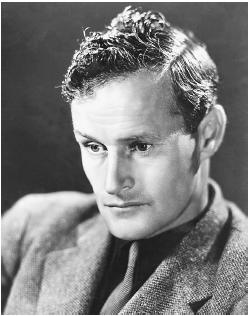
William "Wild Bill" Wellman. The Siren's pick until she was reminded of Welles' youth.

Every woman tells me there was only the One Man she ever really loved. Joan Crawford told me once that the only man she really loved was the rather dull, middle-aged vice-president of a soda-pop company and when I reminded her she'd said this to me about Douglas Fairbanks Jr. and Clark Gable and Greg Bautzer she looked incredulous. Then she said quite simply, "There is always only one though, isn't there?" And told me. It wasn't the vice-president.
--Adela Rogers St. Johns, The Honeycomb
Blogger Larry Aydlette, aka That Little Round-Headed Boy, whom the Siren loves despite his refusal to archive his wonderful blogs, posts a good guess as to Joan's One Man.

If sticking it out for two-and-a-half episodes of Season 1 and one episode this season can be called trying, the Siren has tried with "Mad Men". She sees the attraction, even if the hype blows her mind--everything from Banana Republic to Barron's, for heaven's sake. The Siren admires the cinematic qualities of the series, the fluid camerawork, the carefully angled shots, the flawless integration of sets and costumes. It's pretty. The actors are pretty. The period detail is enough to warm an old-movie hound's heart. But on the whole, the Siren just doesn't dig it.
Despite the stratospheric sex appeal of Jon Hamm, January Jones and Christina Hendricks, the show is just so goddamned dour. The Siren suspects series creator Matthew Weiner wanted to avoid the nostalgia trap, but this is too far in the other direction. A little soupçon of affection for the past will not turn Mr. Weiner's dead-serious critique into "The Wonder Years Meets Ad Age." The Siren has seen movies from the era, and in those movies, people have a good time--every now and then, you understand, between bouts of weltschmerz. As James Wolcott wrote in Vanity Fair, "Mad Men" "has a seductive look, a compelling mood, a cast that could have been carved from a giant bar of Ivory soap, but zero grasp of the elastic optimism and vigor of the Kennedy years, the let-go spring of release after the constriction of the Eisenhower 50s."
Everyone on "Mad Men" goes around smoking and drinking and eating whatever they hell they want and having office affairs without once looking over their lovers' shoulders for process servers bearing class-action subpoenas, but does anyone enjoy it? Not from what the Siren has seen. It's like Saint Augustine wrote the scripts. Such laughs as "Mad Men" affords are tethered to hindsight--"We never indulge in such sexism/racism/anti-Semitism/homophobia now, and even if we do, we sure don't smoke."
Still, the Siren will probably watch more this season--between Wolcott's liveblogging and Lance's occasional commentaries, she doesn't want to be the clueless playground oddball. But in her heart, she'd rather watch a melodrama from the actual late Eisenhower-early Kennedy era. Good or bad, there's plenty to choose from.
So that's my justification for posting these brief takes on ten films actually made during the "Mad Men" period--dramas, because "Mad Men" is not, god knows, a comedy or a musical. These movies vary widely in terms of quality and critical repute, from bona fide masterpieces to simple soapers. But the Siren likes them all, as she likes a lot of the melodramas from this period. Many directors were exploring widescreen technique to admirable effect, and it was a great era for clothes and interiors. And when you watch the movies, you realize that people were far more aware of what was under society's facade than many suppose. (Two of the movies date to 1959--if Don Draper can fade out to Bob Dylan in 1960 then the Siren can cheat back a single year, she figures.)
Imitation of Life (Douglas Sirk, 1959)
Social Issue: Racism.
Sets and Costumes: Perfection.
Sex appeal (Low/Medium/High): Beside the point. But John Gavin was in the full flower of his lockjaw handsomeness and Susan Kohner and Sandra Dee were lovely.
Why the Siren Likes It: It's a masterpiece, that's why, one that belongs on any list of the great films of the 1950s. A master class in how to make a movie about misguided, surface-focused people trapped by a hypocritical society, without condescending to or withholding compassion from them. The proof is that 50 years after its release, the thwarted mother-daughter love still reduces many to tears. The Siren bristles when she hears this described as camp. There isn't a single unintentional effect in it. The falseness and glitter are there to throw race, this country's original sin, into high relief. But Sirk doesn't invite the audience to feel superior. He wants recognition, AND he wants identification. In the superb opening scene on the beach, when Lana Turner reacts with gooey middle-class "understanding" to Juanita Moore's having a white-skinned daughter, Sirk didn't want the white liberals in the audience to say, "What a hypocrite." He wanted them to say, "Shit, that's me." (The beautiful screen cap is from Ways of Seeing, the Siren's new blog discovery; several others, equally enthralling, right here.)
The Best of Everything (Jean Negulesco, 1959)
Social Issues: Working women and adultery (go together like a horse and carriage in Hollywood movies of all eras), unwed pregnancy, abortion, casting couch, alcoholism.
Sets and Costumes: Great New York exteriors and the ultimate in smart little suits. Best of all, the Mondrian-esque office interiors, which Negulesco, a painter, probably influenced.
Sex appeal: High; Suzy Parker, Stephen Boyd, Louis Jourdan, even Robert Evans looks great.
Why the Siren Likes It: Underrated, influential film whose critical reputation is slowly improving. One of a number of "three [or four] girls" movies from the era, direct ancestors of "Sex and the City." Enjoyable on a number of different levels--as highly informative social artifact, as a proto-feminist tract, as an aesthetic treat, as a showcase for newcomers and old pros. The Siren particularly likes good old Brian Aherne as an ass-pinching executive and Joan Crawford, refusing to play her role as straight office harridan, giving her character both dignity and sensitivity. The beauteous Parker (up top) gets the best line: "Here's to men. Bless their clean-cut faces and their dirty little minds." The best appreciation of this film that the Siren has read is over at Noel Vera's place; he pays great attention to Negulesco's use of Cinemascope. From the Terrace (Mark Robson, 1960)
Social Issues: Alcoholism, adultery, class snobbery, cutthroat business practices.
Sets and Costumes: High-end all the way. Joanne Woodward doesn't look completely at ease in Travilla, though.
Sex appeal: High. Paul Newman rates an automatic "high" in this category, as does Myrna Loy at any age.
Why the Siren Likes It: A parable about life versus work that everybody calls dated, except "Mad Men" apes the same themes. The Siren wrote a bit about this movie when Newman died; his performance is very good but the direction is noteworthy too, as is the Elmer Bernstein score.
All the Fine Young Cannibals (Michael Anderson, 1960)
Social Issues: Racism, alcoholism, class snobbery, adultery.
Sets and Costumes: Ersatz Southern, then faux bohemian, but extremely well-shot by William H. Daniels.
Sex appeal: Medium, largely because the Siren doesn't get Robert Wagner.
Why the Siren Likes It: Supposedly based on the life of Chet Baker. Jaggedly uneven and no one seems to have a clue about real white Southerners. But deserves to be remembered, if only for Pearl Bailey's haunting performance. For the Siren and those like her, there's also the nifty bit of role reversal for Susan Kohner, the "tragic mulatto" of Sirk's Imitation of Life, in the same movie as the penultimate role for Louise Beavers, of John Stahl's excellent 1934 Imitation of Life. (Poster is from the great Cinema Retro site.)
Return to Peyton Place (Jose Ferrer, 1961)
Social Issues: Working women (don't kid yourself, that's still an issue), rape, incest, adultery, (disguised) abortion, xenophobia.
Sets and Costumes: Meh. The exteriors look great, though.
Sex appeal: High; Eleanor Parker, Tuesday Weld, Carol Lynley, Jeff Chandler if you happen to like Jeff Chandler.
Why the Siren Likes It: Um...hard to say, since by no stretch of the imagination is it a good movie. This one the Siren won't kill you for calling camp. There really isn't anything else you could call it. The first Peyton Place is camp too, but had real value in Franz Waxman's score (heaven), Diane Varsi and the New England ambiance. Return, well, Ferrer was no director, they added lyrics and Rosemary Clooney when Waxman needed neither, and most of the cast looks about as comfortable as a soaking wet cat. But I appreciate Carol Lynley's pursuit of a career over and above a love affair (similar to the reason I liked Valley of the Dolls' fadeout). Mary Astor is great, playing a full-out embodiment of small-minded paranoia and ugliness. And Tuesday Weld manages to have emotional sincerity in some scenes despite playing opposite the stiffest excuse for a Swedish ski instructor you ever saw in your life.
Susan Slade (Delmer Daves, 1961)
Social Issues: Premarital sex, unwed motherhood, the hazards of cigarette smoking.
Sets and Costumes: Beautiful exteriors by master cinematographer Lucien Ballard, and the vaguely Japanese-style house on the Northern California coast, given to Connie Stevens's father by Brian Aherne (there he is again!) is quite an eyeful.
Sex appeal: Medium, though Connie Stevens (above) does her best.
Why the Siren Likes It: Interesting, Sirk-esque late-career movie by the talented Delmer Daves, with several scenes that have lost none of their ability to shock. Dave Kehr: "To an America that needed to believe that 'nice girls don’t,' Daves’s melodramas responded, 'Nice girls do' — or did at least sometimes, when the appropriate distinctions had been made between lust and love, predatory older males and sincere young men, casual encounters and lifetime commitments." Kehr prefers Parrish and Rome Adventure to Susan Slade and the Siren pretty much agrees with him, but Slade is worthwhile and closest to the "Mad Men" school of social history. Peter Nelhaus has a fine review of the movie, in which he compares it to Daves' westerns.
Advise and Consent (Otto Preminger, 1962)
Social Issues: Homophobia, subversion, government corruption.
Sets and Costumes: Stiff, cold and forbidding, perfectly in keeping with the machinations of the plot.
Sex appeal: Low. Gene Tierney is in this but she wasn't looking her best. Perhaps because he was making a movie about politicians, Preminger shot everyone with a GargoyleCam.
Why the Siren Likes It: Another masterpiece, a fisheyed look at the Washington influence game, usually taken as a riff on Alger Hiss but full of other echos as well. The scenes of back-door-dealing and blackmail ring as true as they ever did. Those tempted to tag the young, upright conservative senator's operatic torment over his gay attractions as quaint should think back to Jim McGreevey, Larry Craig and their many brethren--not to mention their wives. Despite the Red Scare trappings (and those are somewhat back in fashion, if you've noticed), Advise and Consent is one hell of a prescient movie. (To see just how prescient, the Siren recommends you check out this article by Meredith Hindley, senior writer at Humanities, on "The Transformation of Advise and Consent.") The above is from Ways of Seeing, whose proprietor clearly has excellent taste; for more screen grabs to show just how good this movie is, please click over and check out the rest.
The Light in the Piazza (Guy Green, 1962)
Social Issues: Mental retardation, class snobbery.
Sets and Costumes: Stunningly beautiful Italian setting (Guy Green was a highly accomplished cinematographer), Christian Dior dresses for Olivia de Havilland.
Sex appeal: High; Yvette Mimieux, George Hamilton and Rossano Brazzi, and de Havilland is much lovelier than the frightening lip color above suggests.
Why the Siren Likes It: Tender romance with a great performance by de Havilland, who carries the movie. Recently turned into an acclaimed musical that the Siren, alas, did not see. She does think the movie's insistence on the primacy of love, both parental and romantic, makes it a good choice for a musical treatment. At a time when the common practice was to shut the mentally retarded away in institutions, the notion that a developmentally delayed girl (albeit a beautiful one) deserved to marry a prince of an Italian and have babies was nothing short of revolutionary.
The V.I.P.s (Anthony Asquith, 1963)
Social Issues: Cutthroat business practices, tax evasion, adultery, domestic violence, depression.
Sets and Costumes: Enough to make you fly to Heathrow and wait to get fogged in--if flying were still like this.
Sex appeal: High. (Elizabeth Taylor at this point in her career does the same for a movie as Paul Newman. Elsa Martinelli was nothing to sneeze at, and neither was Richard Burton or Louis Jourdan.)
Why the Siren Likes It: See Return to Peyton Place. Plenty of lush period visuals, and there are pleasures to be had from Orson Welles even in unworthy roles (this one tinged with painful self-parody). But it's a pretty bad movie, though hardly the offense to all civilization that Walter Chaw paints it, and Elizabeth Taylor is an unconvincing version of Vivien Leigh. (Note to Mr. Chaw: Rod Taylor was a native Australian.) The Siren likes this primarily for Maggie Smith as the devoted secretary. I do love Dame Maggie. Christina Hendricks is good, but she still could learn something from what Smith accomplishes with a cliched role. Smith's scene with Richard Burton is the highlight, the so-so writing propped up with perfectly timed and calibrated reactions and beats.
Love With the Proper Stranger (Robert Mulligan, 1963)
Social Issues: Premarital sex, abortion, unwed motherhood.
Sets and Costumes: Supposedly low-end, but a mite too clean for all that. Steve McQueen made everything he wore look like a well-broken-in motorcycle jacket.
Sex appeal: High. Look at that publicity shot and tell me different.
Why the Siren Likes It: Has comic moments, but at heart a rather melancholy movie about a still-relevant topic, with legendary leads giving warm, authentic performances despite a wan third act. McQueen seldom let his vaunted cool slip to as much effect as here. When "Mad Men" gives a nudge about how far we've come, we should remember Wood planning an abortion, without hysteria. How many recent Hollywood movies or TV shows have let a beautiful, sympathetic lead do the same?
All right, so it's been a while, have at it. Tell me why I'm wrong about "Mad Men." Point out the movies I missed. (The Apartment isn't there and doesn't belong there; it's a comedy, and a satire, and very funny, and "Mad Men" isn't any of those those things.)
But, as always, play nice. The new banner, which MrsHenryWindleVale recognized without a telescope, is courtesy of the great Glenn Kenny. It is of course Dorothy Malone, from another Sirk masterpiece, The Tarnished Angels. Dorothy is meant to illustrate the Siren's general mood for the past month and probably the next.
Postscript: I've added a link to Peter Nelhaus's fine writeup (with lovely screen caps) of Susan Slade. Despite the deliberately provocative title, my main idea in writing this piece was "Hey, these early-1960s films that I love deserve a second look." So if anyone else has a post on some of these, or a similar movie from 1959-1963, post a link in comments by all means and I'll add it here. I'll start by also linking to Peter's post about Strangers When We Meet (b/w Town Without Pity, which also roughly fits our parameters despite the German setting). The Siren forgot about Richard Quine because--well, see banner above. Because of that.
Awesome screen caps from The Best of Everything right here. Apparently my mistake was not Googling "Suzy Parker."
Nathaniel of The Film Experience has been doing a series on movie references in Mad Men; one post involves a Draper household pillow-talk discussion of The Best of Everything that the Siren is sorry she missed. Great for "Mad Men" fans but rewarding for non-watchers too.
MORE UPDATES:
Vertigo's Psyche gives some love to Siren darling Sandra Dee and her exquisite performance in A Summer Place.
Arthur S., one of the most astute commenters in the film blogosphere, links us all up to a Douglas Sirk interview that is not to be missed.


The Siren is giving up on commenting at Big Hollywood. She likes to pounce occasionally on threads about movies she likes, but as noted by one critic who also quit commenting (because he kept getting deleted, bless him), "aw, nobody wants to play with Campaspe." Not a creature was stirring--nothing, no action. Dullsville.
So anyway, Mildred Pierce. Great movie that prompted a commenter to recall an alleged feminist interpretation wherein Mildred is "punished" for daring to step outside her assigned gender role and pursuing a career. The idea that Mildred is punished doesn't jibe with the Siren's viewing; instead, the "happy" ending where Mildred goes off with the drip she was married to at the beginning of the movie just indicates that in Hollywood at the time, if you wanted a happy ending you had to have the heroine go off with someone. Anyway, the marriage roles are a sidelight in the movie, as the Siren pointed out in the following comment. Maybe one of her patient readers would like to respond.
I don’t think Mildred Pierce has much to do with marriage and wifehood at all. James Agee was one of the critics who pointed out that the movie is much more focused on class, social climbing and attitudes toward money. Mildred’s moral unraveling becomes worse even as she gets richer. The really subversive part isn’t Mildred going to work, which she does out of necessity and abandons when she’s able, after finding a rich partner and a higher station. It’s the movie’s fisheyed look at maternal sacrifice. Instead of being beatific and ennobling, as in Stella Dallas, mother love is perceived as unhealthy, obsessive and narcissistic in the fullest sense of that word. Veda is a sociopath, but it’s Veda whom Mildred really loves, more so than any man in the movie and more even than the angelic Kay. “Don’t tell anyone what Mildred Pierce did!” could mean covering up a murder, but in the end it’s the unanswerable question of whether Mildred’s love “did” something to Veda and created this monster, or whether Veda (with the very name and spelling connoting “venal”) was what she was from birth. Mildred’s independence at the end, such as it is, results from her having taken Eve Arden’s joking advice and “eaten her young”–finally (and reluctantly) leaving Veda to her fate. Although, so tied to her dreadful offspring is Mildred that I’ve always wondered if Veda was able to work more machinations on her mother even from behind prison bars. Veda would fit in well in Caged.
And...Jack Carson is pure joy in this movie, as is Arden, who is the movie’s example of a woman happy and secure in herself–and single.
(The above photo is from Legendary Joan Crawford, a beautifully maintained site which has the most awesome collection of Joan Crawford photographs on the Web, bar none. You could spend hours there--I have.)
P.S. Please run over to The Auteurs, where Glenn Kenny has a weekly column about Foreign-Region DVDs. This week's item was requested by the Siren, and he delivers: a write-up of the Frank Borzage-directed, Ernst Lubitsch-produced Desire, which has been released in the U.K. Go, read and see if the screen-caps alone don't explain why the Siren mentions this every time the subject of "not out on Region 1" comes up.
The Siren has been double-dog tagged, by Peter Nelhaus of Coffee, Coffee and More Coffee and Tony Dayoub of Cinema Viewfinder. This traveling list originated with Nathaniel R at The Film Experience, so if you've been tagged, go blame him for the fact that it's ridiculously hard, the hardest meme ever. Twenty actresses. Only twenty! Next time, gentlemen, just go ahead and ask the Siren to pick 20 favorite children, all right?
To whittle things down, the Siren gave herself but one requirement: The actress must be someone whose presence alone, irrespective of director, scriptwriter, subject matter, cinematographer, location or studio, will prompt the Siren to watch the movie. Even if the Siren suspects, or knows, that a movie is a wing-flapping wattle-waving turkey, she will watch it for one of these actresses.
The Siren has added a small embellishment by picking a still from a favorite movie for each actress. The pictures are very easy to guess, for the most part; it was just something the Siren did for her own amusement.
Myrna Loy.
Bette Davis.
Joan Crawford.
Greta Garbo.
Carole Lombard.
Joan Fontaine.
Lillian Gish.
Barbara Stanwyck. Should be on everyone's list.
Miriam Hopkins.
Alida Valli. The Siren saw this movie again recently and it was better than she remembered it.
Danielle Darrieux.
Kay Francis. I already proved I will watch anything with her. I sat through Doctor Monica, for heaven's sake.
Margaret Sullavan. This publicity still is for X. Trapnel; it was lifted from Classic Montgomery, a terrific classic-film blog from a fan of the actor Robert Montgomery. So far it wins the prize for most bizarre stars-link-arms-and-walk-toward-camera-still ever.
Katharine Hepburn.
Thelma Ritter.
Gloria Grahame. See Stanwyck.
Hideko Takamine.
Janet Gaynor.
Catherine Deneuve. All the boys will grab an opportunity to post something from Belle de Jour but this movie was the Siren's first Catherine love.
Meryl Streep. The Siren has problems with this movie, but chose this still because people forget what a unique beauty Streep was when starting out. Still is, in fact, and thank god she can still move her forehead.
You will notice that neither Bennett sister appears here; Constance and Joan just missed this tier. If I see more early work that I love, they may yet make it. Also cruelly forced out by the numerical limitations were Judy Holliday, Jean Harlow, Julie Christie, Ruth Chatterton, Clara Bow, Eve Arden, Dorothy Dandridge, Gong Li, Mary Astor, Gene Tierney, Anna May Wong, Setsuko Hara, Olivia de Havilland, and Ruby Dee.
All right, here are the Siren's tags:
J.C. Loophole of The Shelf (he volunteered--this'll learn him)
Marilyn Ferdinand of Ferdy on Film (she probably hates these things, but she will make great choices)
Operator_99 of Allure (this is his second tag from me in as many months, but come on, look at how great his A-Z list was)
Kimberly at Cinebeats (dying to see her swingin' list)
David Cairns at Shadowplay (I expect totally fabulous classic choices from him, too)
P.S. Damnit. I forgot Isabelle Huppert. I think this blog is in Portuguese--which I do not speak, alas--but she has picked up the actress meme and her taste needs no translation. Amazing pictures.
And since I am adding a link anyway, here is an unrelated tip--rush over and read David Cairns' post on the underrated William Dieterle and The Last Flight.

So, Dennis Cozzalio of the splendid Sergio Leone and the Infield Fly Rule tagged me with this "12 Movies I Need to See" meme. Now, as I understand it, the original meme was supposed to be about movies that you wanted to see, but could not locate, perhaps in the generous supposition that you've seen all the important stuff that's available. Well, there's a lot the Siren hasn't seen. It is, to be blunt, fucking embarrassing, some of the movies I haven't seen. The biggest gap: no Robert Bresson. Nary a film. You can all log off right now.
But rather than indulge in my own form of Cinematic Humiliation, à la David Lodge, I decided to combine this with another occasional meme from my beauty-blogger pals. This is called the Use It Up Challenge. If you're a beauty-product junkie, you always wind up with a bunch of half-used stuff abandoned in the back of your medicine chest or vanity case, waiting patiently to be taken out and played with again like so many cosmetic Velveteen Rabbits. The Use It Up Challenge asks you to take out the stuff, use it up, recycle the containers and move on with your life. It's a very good thing to do. (Although it has risks. In trying to use up one Serge Lutens perfume, an extraordinarily pungent jasmine scent called A La Nuit, the Siren succeeded in putting herself off jasmine for almost two years.)
So when this homework assignment came up, the Siren's head immediately swiveled from her computer screen to her DVD shelf, and the group of discs she still hasn't watched. It's a diverse and poignantly large group. Poor little guys. They don't ask much, just their chance to strut and fret upon the screen, and instead the Siren keeps tuning into her TCM addiction or her Netflix discs or Netflixing old Columbo episodes (Columbo is what I do for stress, instead of hard liquor) or popping into other people's blogs.
There are the DVDs that the Siren bought, unwrapped and hasn't watched yet, and those are bad enough. But the ones that really reproach her are the unseen movies sent by friendly bloggers. These wonderful guys went to all that trouble, and still I haven't watched. What's wrong with me? I guess I procrastinate a lot. I'd tell you for sure, but I won't be able to ponder it until a bit later in the week.
So here's a list for the Siren's "12 I Haven't Seen, So Use Them Up" Challenge. I am starting this with a handicap, in that I still haven't purchased a DVD player. I'm having a bit of Consumer Anxiety, trying to decide what to get. As soon as this is rectified, however, I am going to watch 'em all, and post at least something brief as I periodically check them off the list.
The first three were received via the kind offices of Mike P., the movie brain known as Goatdog.
1. Heroes for Sale (William Wellman, 1933) Sent to me after I was wowed by Wild Boys of the Road.
2. The Constant Nymph (Edmund Goulding, 1943) Sent to help complete my Joan Fontaine viewing. I read the book as a girl and perhaps that's why I have put it off--it's a tearjerker, if it follows the original story.
3. Christmas Holiday (Robert Siodmak, 1944) Sent because of my kind words for Deanna Durbin. I wanted to schedule this for Christmas but I seem no more capable of watching a Christmas movie at Christmas than I am of finishing all my shopping by Thanksgiving weekend.
The next four came a long while ago via Peter Nelhaus:
4. Blue Swallow (Jong-Chan Yun, 2005) Sent to shore up my shaky Korean film knowledge, without my having to watch someone get tortured.
5. The Curse of the Golden Flower (Zhang Yimou, 2006) Sent because he knows I love both director and star (Gong Li).
6. Exiled (Johnny To, 2006) See #6 (although maybe someone does get tortured in this one, I'm not sure).
7. Letter from an Unknown Woman (Jinglei Xu, 2004) With this one I think I'm just afraid of the comparison to the Ophuls.
This next was received via David Cairns's Duvivier Giveaway.
8. La Fin du Jour (Julien Duvivier, 1939) I will have to get another multiregion to watch it, I'm afraid, but I really want to.
This one was given me ages ago by Girish and somehow I never watched it.
9. The Marriage Circle (Ernst Lubitsch, 1924) God I suck. Why haven't I sat down for this one? It's Lubitsch, for crying out loud.
This one was sent by Flickhead:
10. A Talking Picture (Manuel Oliveira, 2003) Sent because he's a mensch (don't tell him I said so) and because I expressed admiration for Je Rentre à la Maison.
These two were purchased on Glenn Kenny's say-so:
11. L'Argent (Marcel Herbier, 1928) Glenn swore you can read the intertitles with limited French. Let's hope he's right.
12. Make Way for Tomorrow (Leo McCarey, 1937) Actually, this was purchased on the entire blogosphere's say-so.
As a bonus, to keep with the spirit of the original challenge, here are twelve I dearly want to see, but am having the devil of a time finding:
1. No Greater Glory (Frank Borzage, 1934) Of course there's a Borzage. There's always a Borzage. This one is an antiwar allegory based on a novel by Ference Molnar. It's lovingly described in Lawrence Quirk's The Great Romantic Films. (Quirk's volume was one of my first movie books ever and to this day I use it as a reference. If Wikipedia is right, he's about 75 now, and one day I'd like to meet Mr. Quirk and tell him how much his serious exploration of this type of movie influenced my instinct to take them seriously as well.) No Greater Glory is one of the few Borzage movies that doesn't depict a couple's romance. Instead the focus is on the war games played by feuding groups of boys in a lumber yard, and one misfit boy's (George Breakstone) yearning for love and acceptance from his group's leader (Jimmy Butler, who in a painful irony was killed in action in France in 1945).
2. So Red the Rose (King Vidor, 1935) My father preferred this Civil War movie to Gone with the Wind. Dan Callahan's Senses of Cinema article on King Vidor (do click, Dan is worth reading on any topic) says the movie portrays slavery in a far more complex way than Selznick's opus, which might explain why it failed at the box office. It was such a complete disaster, in fact, that no one would touch a Civil War movie for a number of years afterward. Not available in any format.
3. Only Yesterday (John M. Stahl, 1933) Margaret Sullavan in a loose adaptation of Letter from an Unknown Woman. People who have seen it are unanimous in praising it. Apparently stuck back in whatever hidey-hole Fox has put a bunch of other Paramount movies.
4. The Crash (William Dieterle, 1932) Ruth Chatterton was a remarkable actress, stage-trained but perfectly in tune with the camera. She bowled me over in Lilly Turner, Female and the great Dodsworth. I want to see more.
5. Un Carnet du Bal (Julien Duvivier, 1937) Along with Pepe le Moko, one of the movies that put Duvivier on the map. Not available. Why?
6. Safe in Hell (William Wellman, 1931) My respect for Wellman just keeps growing. This one has popped up in repertory houses and at least once on TCM but I haven't seen it yet.
7. Les Visiteurs du Soir (Marcel Carne, 1942) Because Children of Paradise is one of my favorite movies of all time. As far as I know, not available on DVD in any region. I will probably resort to getting it on VHS at some point.
8. La Traversée de Paris (Claude Autant-Lara, 1956) Available in France but not with subtitles.
9. Floating Clouds (Mikio Naruse, 1955) Available in a French DVD and a BFI edition, in both instances packaged with two others I have already seen, which means that on my budget I don't want to stomach the exchange rate. If I hear one more time that Criterion is working on this one I will scream. Promises, promises! 10. The Private Affairs of Bel-Ami (Alfred Lewin, 1947) Lewin was a true talent and this is said to be one of George Sanders' best performances. Will probably resort to VHS for this too.
11. Summer Storm (Douglas Sirk, 1944) Not available in any format.
12. The Blue Veil (Curtis Bernhardt, 1951) Incredibly rare. One IMDB user claims to have spent more than $1,000 trying to locate a watchable copy. Never released on VHS either. Stars Jane Wyman, who isn't a favorite of mine, but also Charles Laughton and Joan Blondell, who certainly are. Curtis Bernhardt directed A Stolen Life and Sirocco, both of which I liked.
I was going to list What Price Hollywood? (George Cukor, 1932), but to my utter delight, this one is showing Oct. 1 at 11:45 pm on TCM. So that's my deadline for fixing the DVD recorder situation.
I'm not sure there is anyone left to tag, but if you want to keep me company and fess up to the DVDs you own, but need to Use Up, by all means do so. And if you haven't contributed to this meme, or its variations, by all means do so.
(Pictures, from top to bottom: Peter Lorre, as fellow bloggers demand to know why he has been neglecting Bresson. Kidding. It's him in Crime and Punishment. I haven't seen that one either. Next, Christmas Holiday: Gene Kelly and pal want me to watch this one before Halloween, Deanna just wants me to watch it. The Curse of the Golden Flower, also know as Gong Li Displays Entirely New Assets. So Red the Rose--probably not a good one to watch if I'm in a firebreathing political snit. Finally, The Private Affairs of Bel-Ami, which was clearly a feminist polemic.)
(Updated & corrected 9/23. Thanks J.C.)

The Siren is tied up at the moment, but she remembered this tidbit from Joan Collins' Past Imperfect and decided to share. Yes, I own Joan's memoirs. In hardcover. And I love Joan. You gotta problem with that?
Anyway, we had mentioned the Diane English remake of The Women but the Siren frequently forgets that this is the second remake of the Luce/Cukor classic. The first remake was The Opposite Sex, from 1956. Joan took the part of Crystal Allen, which Crawford had played with such panache. But Collins encountered some problems that Crawford didn't report, including a horrendous skin reaction to the soap flakes used in the bubble-bath scene. The Siren hasn't seen this version, one reason being that it's supposed to stink. But that doesn't stop her as much as the presence of Hollywooden actress (thanks, Mr. Wolcott) June Allyson in the old Norma Shearer part.
Collins, however, has a tale to tell regarding Allyson and why it's those "sweet" types you really need to watch out for -- not to mention anybody in a Peter Pan collar. Time came to film the big confrontation.
June was a tiny lady, about five foot two in heels. She was famous for her cute blond bob and her Peter Pan collars. She was petite, delicate and ladylike, so I was not concerned that she had to slap my face after the following dialogue.
June: By the way, if you're dressing for Steven, I wouldn't wear that. He doesn't like anything quite so obvious.
Crystal: When Steven doesn't like what I wear I take it off!
...And June hauled off and belted me. This little lady with her tiny hands had a punch like Muhammad Ali! I felt as if a steamroller had hit me. Something fell from my face and hit the floor with a loud clatter--my teeth? Oh, God, no. Please don't let her have knocked out my teeth? My head was ringing, as the slap had connected with my ears, and I couldn't hear a thing. Stars danced before my eyes and I staggered to a chair and collapsed.
"Cut--cut, for Christ's sake, cut!" screamed director David Miller. "What the hell's going on here?"
June burst into tears and collapsed into another chair. Makeup men and dressers rushed to the set with smelling salts and succor.
I put my hands tentatively to my mouth. Thank God, a full set of teeth still, but what flew off me? The wardrobe lady solved the mystery, retrieving the long rhinestone earrings which the force of June's slap had sent spinning. But any more shooting was out of the question. On each of my cheeks was forming the perfect imprint of a tiny hand! Branded, if not for life, for the two or three days it took for the welts to go down. June was desperately sorry, and it took longer to calm her down than it did me. Luckily, when they saw the scene on rushes it was unnecessary to reshoot the slap--it had complete authenticity!
Is it just the Siren, or does it seem that there was something else going on here? It isn't hard to cheat a slap. The Siren herself learned how to do it. Perhaps Allyson was so tiny that nobody thought it worthwhile to teach her how. Or perhaps Allyson had vast reserves of repressed anger that came roaring out at that moment.
Or, deep down inside, she wasn't sweet at all. Hmm...

As for Joan, not everyone has to be a talent for the ages, and the Siren just finds Collins enormous fun, from her taste for younger men to her pronouncements on why you should always wear foundation (that's makeup, guys) and her endearingly frank memoirs. She's a unique combination of highfalutin' and down-to-earth. Not every diva would cheerfully tell how Howard Hawks, who liked his women slender in life and on screen, rebuked her for indulging in too much food when shooting Land of the Pharaohs in Rome. Collins, who'd been up the previous night wolfing pasta and zabaglione, batted her eyelashes and claimed to have eaten only three hard-boiled eggs for two days. Hawks snapped, "Well you better cut it down to two hard-boiled eggs."
