
For what it is worth, and as she re-reads her own contributions the Siren must truthfully answer “not much,” the Siren is on Twitter, until such time as she decides not to be on Twitter anymore. Right here: http:/twitter.com/selfstyldsiren. No second “e” in “selfstyldsiren.” The Siren’s rightful title was usurped by someone, hence at least part of her Bad Twitter Attitude.
And a while back the Siren received some very kind words from City Island director Raymond de Felitta, whom she is happy to call a friend, over at Salon.
We veer away now from self-promotion to what the Siren has been reading and watching around the Web, mostly a little out of date, but this is the Siren, so out of date is a way of life.
Further to our Bonjour Tristesse discussion, the Siren has been remiss in not thanking Vertigo's Psyche for putting up this link to part of an interview Jean Seberg did with Mike Wallace just before the movie's release. Her youth and beauty and the unconscious foreshadowing will send your heart careening into your ribcage.
So you think the Siren is mysterious, do you? Well, she isn't, she's just paranoid, which isn't really the same thing. You want mysterious, go with That Little Round-Headed Boy. We all know he's actually Larry Aydlette, but he comes and goes like the Shadow, leaving no archives, just fond memories of how his intelligence and wit lit up a subject like Burt Reynolds or, in this instance, the criminally underappreciated George Roy Hill. Start here and work your way through. You will not, repeat not be sorry.
The best analysis of the sublime Sullivan’s Travels you could ever hope to read, at David Cairns’ place. Read the comments too.
David Ehrenstein earns the envy of film lovers everywhere by interviewing the too-fabulous-for-words Anna Karina, right here in the LA Weekly.
Glenn Kenny on The Shanghai Gesture, at the Auteurs. She said it at Glenn’s place, the Siren will say it again here—god how I love this crazy-ass movie.
At Allure, Goldwyn’s Folly, the ill-starred Anna Sten, with an addendum here, as always with rare pictures from Operator_99’s vast collection.
Vadim Rizov gives You Can’t Take It With You the fisheye at the Indie Eye, and boy did that movie have it coming.
Raquelle at Out of the Past, true to the film her blog is named after, has been blogging like crazy about lesser-known corners in the career of Robert Mitchum: beautiful screen caps from Ryan’s Daughter (and a meditation on CGI), Mitchum’s son James in Thunder Road, and not one but two posts on Mitchum’s Calypso album (she’s a glutton for punishment, is Raquelle).
At L’Eclisse, a fun post on a topic the Siren loves: classic comfort movies.
At Carole & Co., How the Cold War Aided Film Preservation.
The Siren's latest Youtube obsession: The Tired Old Queen at the Movies. Steve Hayes is a familiar face to the Siren—we knew each other a while back, when he was doing a hilarious one-man show that included such gems as a dead-on imitation of Susan Hayward’s Brooklyn-Meets-Dublin accent mashup in the unforgettable Untamed. Now Steve is doing for Youtube what he used to do for cabaret, and I'm working my way through them. Favorite so far: the Queen's exegesis of Lana Turner's driving in The Bad and the Beautiful.
Finally, the Siren hasn’t mentioned this before, but she has a sister, and her sister has a blog. The Velveteen Hamster has nothing to do with movies; that obsessive gene passed mostly to the Siren. My sister’s blog has mostly to do with raising three boys—my nephews. Two have a serious medical condition, and the third is autistic. Please excuse the familial pride, and Rebecca, please excuse my language—but goddamn it, this is a beautiful post.
 No help for it. The Siren started to reply to the torrent of comments on comic character actors, then realized she needed a whole other post. We really miss these guys, don't we? The Siren stresses once more that this was a post about comic character actors, so some true greats (like Thelma Ritter, whose finest performance in Pickup on South Street was serious indeed, and ditto Thomas Mitchell, at his best in The Long Voyage Home) were left out on technicalities. Still, the Siren's patient readers are forcing her to apologize to the ghosts of the following:
Mary Boland. L'amour, l'amour ... The Siren let poor Mary down, so she is picking her up again, dearie.
Eugene Pallette. As Moviezzz puts it, "From his work in the Philo Vance films, the Deanna Durbin films, to Friar Tuck, and Mr. Smith as well as My Man Godfrey, he is one actor that I will see anything he does. That voice alone. And, in something like First Love, he can even play against type." The Siren remembers Pallette's deathless performance in My Man Godfrey, as the head of the Bullock clan, and deeply regrets not including him. He's superb in that movie, buttressing his fragile sanity by firing off joke after joke at his batty family's expense: "All you need to start an asylum is an empty room and the right kind of people."
Mary Wickes. DeeLuzon was too right about her, this was a face one was always happy to see. Mischa Auer. You're right, X. Trapnel--all it took was recollecting Carlo's monkey imitation to make the Siren regret Auer's absence.
William Demarest. The brain switch was in the "off" position when the Siren omitted him from the post. He should have made it just for the way he delivers Preston Sturges' musings on the lifelong bond between a pater familias and his female offspring: "Either they leave their husbands and come back with four children and move into your guest room, or their husband loses his job and the whole kaboodle comes back. Or else they're so homely you can't get rid of them at all and they hang around the house like Spanish moss and shame you into an early grave." Shamus, Ivan, anyone else -- there he is now, where he belongs. Franklin Pangborn. The ultimate "sissy" as discussed by Vito Russo, but Pangborn always gave his roles great interior dignity. Whether fitting a dress, running a cruise ship, overwhelmed by a treasure hunt or organizing a welcoming committee for an ersatz hero, Pangborn played the dilemma the way his character saw it--as a problem of great societal import.
Blanket apologies to the shades of the following: James Gleason, Charlie Lane, Charlie Ruggles, Robert Dudley, Charles Coburn, Alan Hale, Billy Gilbert, Melville Cooper, Sig Ruman, Roland Young.
GayasXmas makes an excellent point, that the best character acting is now to be found on television. Which also segues to Alex's excellent question--WHY did character actors disappear from the movies? certainly the talent is still out there. Alex pins it on plot construction. The Siren agrees, but adds that more than ever, plots are woven around the marquee-name stars, and larded with special effects that, in addition to administering the requisite number of jolts, also are built to get the laughs that used to belong to the character players. The Siren repeats something she mentioned when discussing Mildred Natwick (oops, we ALL forgot Mildred, didn't we? for shame!):
Nowadays the studios pay $20 million or whatever for Jim Carrey, and once they pay that you are by God going to get Jim Carrey in every frame, I don't care if it's a childbirth scene in a women's prison, we'll get Carrey in there somewhere. Star vehicles have no room for a superb character actress like Natwick, mud-fence homely but perfect in every role.
The Siren winds up by saying that it's no coincidence that the Coen brothers, with their reverence for the likes of Preston Sturges and encyclopedic knowledge of film history, are among the small group of filmmakers who still recognize that a character turn can help lift a movie into immortality. Any other filmmakers still doing that?

One of the reasons that the movies of today aren't as much fun as those made in the first two decades of Talkies is because they jettisoned their great army of supporting players. At one time when people reminisced about movies, they were more likely to be talking about Eve Arden than Doris Day or Jane Wyman, whose friends she played on some funny occasions. Her first appearance always caused an appreciative buzz, and her slightest glance was treasured more than all the star's vapourings...She could make almost any line funny, though her forte was the sort of lines that went with the look-elegant bitchery or advice she knows the heroine is too stupid to accept.
That, in one of the most dead-accurate paragraphs he has ever written, is how David Shipman summarizes the delicious Eve Arden in The Great Movie Stars: The International Years--but he could be writing the epitaph for all of the era's great comic character actors. It was a golden age for comic relief and it is, alas, as dead as the dodo. For the Newcritics Comedy Blogathon Blowout, the Siren herewith offers some brief takes on the characters she loves. And she loves them with a passion.
We'll start with Eve Arden. Is she not everyone's favorite thing in Mildred Pierce, whether she's taking Jack Carson down a peg ("Leave something on me, I might catch cold") or trying to give Joan Crawford a clue about daughter Veda's real nature ("Alligators have the right idea. They eat their young")? Eve made a decades-long career out of being the smartest gal in the room, whether backstage as a Ziegfeld Girl, in a rooming house trying to get in the Stage Door, or working for a fashion editor in Cover Girl. In a melodrama she'd give you a whimsical moment between hankies, as in My Reputation; in a piece of unalloyed kitsch like Song of Scheherezade she'd be the only one who seemed to realize the train had left Reality Station, so you might as well live it up.
The Siren has a one-year-old who apparently harbors dreams of moving to Australia, since that is the time zone he has decided to synchronize with. Despite having become an unwilling participant in an endless day-for-night shoot the Siren stayed up to midnight on Wednesday night to watch The Hard Way from 1943. Did she watch it for Ida Lupino, director Vincent Sherman or even the towering genius of cameraman James Wong Howe? No way. She watched it for Jack Carson. He was born in Manitoba (of all places) but his persona was wise-guy American, complete with a voice so nasal it seemed to originate at the bottom of his sinuses. Probably the best acting he ever did (and he was always good) was in A Star Is Born, in the deeply unfunny role of the heartless agent. He played a lot of light comedies too, often with Dennis Morgan. But Carson's strong suit was comic relief, often mixed with a dash of the heavy, as in Mildred Pierce ("Oh, I'm happy. Believe me, inside my heart is singing") or more than a dash, as in The Strawberry Blonde. He could hold his own with Errol Flynn in Gentleman Jim and underplay in scenes with a frenetically mugging Cary Grant in Arsenic and Old Lace.
No tribute to comic character actors could be complete without mention of the great Margaret Dumont. She was, without question, The Greatest Straight Woman of All Time. Marx authorities ranging from Dick Cavett to Groucho himself all say Dumont didn't get the jokes, on or off screen, but the Siren doesn't buy it. Dumont had a long career as a comic foil, and face it, she is too good not to know what she's doing. To be a good straight (wo)man, it isn't enough to keep a poker face and ignore the lunacy. Kitty Carlisle, Lillian Roth and Kay Francis all do that, and they still get flattened. No, Dumont had something extra--the ability to broaden her characterization with each new joke. Her finest moments probably came in Duck Soup, where her manner is so impeccably grand she seems to have wandered in from some Ruritanian operetta filming on another soundstage. Groucho was one of the funniest men American comedy ever produced--and if you want to say THE funniest the Siren won't argue. But it takes nothing away from Groucho to state that he was never funnier than when he was bouncing joke after joke off Dumont's imposing figure.
Andrew Sarris used to tell a story about a party where he encountered a fellow who edited films for television. Seems the editor was eager to tell Sarris about how he improved the Fred Astaire-Ginger Rogers films by "cutting out all those boring dance numbers." This horrifying tale from the days before Turner Classic Movies came to rescue us doesn't mean that we should neglect three non-dancing stalwarts from the Astaire-Rogers movies, Eric Blore, Erik Rhodes and Edward Everett Horton. (All three were discussed with great verve in Vito Russo's landmark The Celluloid Closet.) Blore was in five of nine Astaire-Rogers musicals, usually playing an English butler, frequently one dim in wit and dubious in ethics. But Blore's best role was undoubtedly as Sir Alfred "Pearlie" McGlennan-Keith R. F. D., con-man confidant of Barbara Stanwyck and Charles Coburn, in The Lady Eve: "Into the gulf that separated the unfortunate couple, there was a coachman on the estate, a gay dog, a great hand with the horses and the ladies, need I say more?" Rhodes appeared in Top Hat and The Gay Divorcee,
 offering proof to homegrown audiences that there was something a little swishy about these Continental types: "Your wife is safe with Tonetti! He prefers spaghetti!" Horton usually played wholly inadequate husbands of some sort, using his carefully honed double-take, one of the best in the business, to convey utter shock at being suspected of some sort of caddery, as in Top Hat. Of the three, Horton had the most extensive career. The Siren's favorite Horton role is his turn as the impossibly dull husband of Miriam Hopkins in Design for Living.
Billie Burke played the dithery matron to perfection in many comedies of the 1930s. Burke, who had been a great beauty in the days when she was married to Florenz Ziegfeld, had an impeccably upper-crust accent and a voice like a piccolo with the hiccups. The adjective that clings to Burke is "fluttery"--yet, if you watch closely, you'll see that there is an economy to her movement. She conveys fluttering without flapping. And nobody did the wan, put-upon, strictly-social smile like Billie Burke--watch her turn it on Jean Harlow and Wallace Beery in Dinner at Eight. Her signature role, Glinda the Good Witch, is a good deal mushier than Burke's usual outings. Her characters were frequently atrociously selfish, as with her aspic-obsessed party-giver in Dinner at Eight and blithe con artist in The Young in Heart, but they were usually capable of being nudged into better behavior by the last reel.

S.Z. Sakall found refuge from Hitler's Europe in roles as a bemused, bewitched and bewildered mensch, often behind a bar or a front desk, as in Casablanca and Seven Sweethearts. The Siren loves the way Sakall swallows his lines--half the time you have no idea what he's saying--and lets his rubbery jowls do much of his acting for him.
Ralph Bellamy and Gail Patrick may seem out of place in this roundup, as they were both strikingly good-looking and often played second leads of some sort. But they almost never got the hero or heroine, and both of them were at their best in comedies. In My Man Godfrey, Patrick almost walks away with the picture as she raises one bitchy eyebrow at all of Carole Lombard's lovelorn antics. And in My Favorite Wife, she sets up some of Cary Grant's best lines, then gets to punch Grant in the face--and the audience knows he deserves it. Ralph Bellamy reaches his nebbishy apotheosis in His Girl Friday, even to the indignity of having his character described to a T as a Ralphy Bellamy type. He is one of that beloved movie's least-sung glories, but god is he funny, the picture of reasonable benevolence as he intones, "Hildy, we could take the six o'clock train if it will save a man's life!"
Finally, the Siren mulled long and hard over whether to include Sidney Greenstreet and Peter Lorre in this list, finally deciding that no, they really don't belong, as marvelously and subversively witty as they are. Greenstreet and Lorre are usually playing villains, not comic relief...and great villains would be another blogathon altogether.
The floor is open. Go ahead, argue with the Siren. Knock her over the head with a rubber chicken and demand to know how she could forget your favorite character actor. Frank Morgan? Eugene Palette? Marjorie Main? Anyone? And if you think there is someone from our own less-funny era who deserves a place at the table, share that name too.
(This post is part of the Newcritics Comedy Blogathon, going on until tomorrow, Nov. 11. Stop by Newcritics for more musings.)
 Today, July 16, marks the 100th anniversary of Barbara Stanwyck's birth. There was a time when the former Ruby Stevens of Brooklyn was familiar mostly as a white-haired matriarch on television series like The Big Valley, The Colbys or The Thorn Birds. Thank god those days seem to be fading, and now Stanwyck's movie career is deservedly at the forefront. There are many cinephiles who will happily name her as their favorite actress. Well, why should they be any different from Stanwyck's Hollywood peers? Here is just a small sample of what the Siren turned up in her search for what other professionals thought of "Missy," as her friends called her:
Beloved by all directors, actors, crews, and extras.--Frank Capra
She's one of the greatest women and the one of the greatest actresses I ever worked with.
--Walter Huston
The best actress I ever worked with.
--Joel McCrea
Stanwyck, of course, was a brilliant actress. She could do anything.
--William Wellman
Working with Barbara Stanwyck was one of the greatest pleasures of my career.
--Fritz Lang
[Howard Hawks] always ranked her among the best actresses with whom he ever worked.
--Hawks biographer Todd McCarthy
Barbara Stanwyck is a fantastic actress. When she makes a gesture as she speaks a line, she has a way of suspending that motion in mid-air for a split second on a certain word which gives an imperceptible emphasis to that word.
--Mitchell Leisen
A professional's professional, a superb technician with a voice quality that immediately hooked you with its humanness.
--King Vidor
Barbara Stanwyck had an instinct so sure she almost needed no direction.
--Preston Sturges
When [in 1932 Picturegoer] listed the top six female stars (Garbo, Constance Bennett, Dietrich, Chatterton, Shearer and Crawford), [Adolphe] Menjou himself told the editor that in Hollywood Stanwyck was rated above the last two.
--David Shipman
How's that for unanimity? The Siren agrees with Adolphe Menjou, and would in fact rank Stanwyck's abilities above that entire Picturegoer list, even above Garbo, who was an instinctual actress and not the superb technician that Stanwyck was. So on this fine Monday, let us take some time to talk about Barbara Stanwyck. Here, the Siren lists her favorites. She loves the actress in all of these movies, and the titles are ranked solely to indicate how much pleasure the Siren gets out of each performance:
1. The Lady Eve
2. The Strange Love of Martha Ivers
3. Double Indemnity
4. Remember the Night
5. Stella Dallas
6. Ball of Fire
7. The Mad Miss Manton
8. Lady of Burlesque (Stanwyck, as Joel McCrea noted, was in burlesque herself and "came up the hard way.")
9. Clash by Night
10. Titanic
Over to you. Name your favorite Stanwyck roles. Did she ever give a bad performance? (Not many actresses who spark that as a genuine query!) Where should she rank in the pantheon of Hollywood actresses?
(Cross-posted at Newcritics. Also, check out Peter Nelhaus's take on Roustabout here.)
As we count our blessings this holiday season, the Siren counts Turner Classic Movies as the greatest of these. Sunday night she finally got to see a movie she has tried to track down for a while, 1940's Remember the Night, directed by Mitchell Leisen. We all need a little warmth and kindness this time of year--yes, even us merry apostates--and this movie provided much.
The screenplay was written by Preston Sturges, but this is a sentimental romance, not one of his trademark farces. Biographer Donald Spoto says Remember the Night was written soon after Sturges's marriage (his second of four, but a honeymoon's a honeymoon), and it carries the gleam of newfound love. Barbara Stanwyck plays a shoplifter arrested just before Christmas. Fred MacMurray is the assistant D.A. who must prosecute her, a tall order since juries are inclined to be lenient around the holidays. MacMurray executes a deft courtroom maneuver and gets a continuance, meaning Stanwyck's fate won't be decided until after the holidays. But his conscience bothers him when he overhears her lamenting that she can't make bail, and so will spend Christmas in jail. He bails her out, only to have the bondsman deposit her in his apartment even as he prepares to go home to Mom in Indiana. Turns out that Stanwyck, too, is from Indiana, and MacMurray decides to take her along for the drive.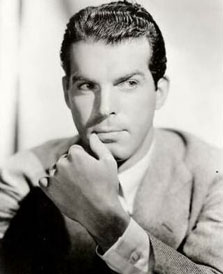 MacMurray has been dissed a bit lately, by Dave Kehr and the estimable Looker, but the Siren disagrees. He was the least starry of leading men, and that was the whole point. His good looks are of the sort you might encounter in any office. When he turns on the charm, he's no more or less resistible than that boy you used to date in college. His characters telegraph jokes like a kid brother does, with a little grin at his own cleverness (a technique that reached its apogee in Double Indemnity, as Walter Neff registers self-congratulation with every double-entendre). That everyday quality meant MacMurray gives the audience the chance to recognize itself, something that is harder to do when looking at, say, Cary Grant. When MacMurray decides to bail out Stanwyck, instead of seeing only a wildly improbable plot twist, you see the kind of reluctant, I-don't-need-the-guilt charity we all are prey to at the holidays.
 Stanwyck, as usual, is marvelous. In the courtroom scene, see her watch a hambone lawyer (Willard Robertson) spin an absurd theory of how self-hypnosis lured her into unintentional theft. Stanwyck's reaction shots start out demure, but none too optimistic. As the jury starts to buy all that lawyerly hokum, her posture improves, her eyes start to sparkle. She tries to maintain a look of contrition, while she eases her gorgeous legs a little more into the jury's sightlines.
Because Stanwyck is too smart to milk the audience for sympathy, she wins it early on. MacMurray takes her to dinner after bailing her out (come on, it's a Christmas movie, suspend that disbelief) and, as a band plays "Easy Living," the title tune from an earlier Sturges-Leisen collaboration, she summarizes her life of crime. MacMurray, already succumbing a bit, half-jokingly suggests kleptomania as a defense. Won't work, says Stanwyck, as though revealing a trade secret: "You can't try to sell the stuff afterward, or you lose your amateur status."
The Indiana the characters reach, after some slapstick road diversions, has two sides, which together give Remember the Night its heart. Stanwyck's town comes first; as they drive down the Grover's Corners streets, her expression changes from eager nostalgia, to fear of what is coming next. Her house is a gingerbread Victorian, looming over the yard like a mausoleum, without a single light in the window. Here, Stanwyck tries to make up with the grimmest old meat-axe of a mother in the history of Christmas movies. The alternate-universe Beulah Bondi in It's a Wonderful Life has nothing on Georgia Caine here. The recriminations start right away, and you see that Stanwyck the shoplifter was just living down to expectations. MacMurray stands to one side, trying to stay out of it until, in a perfectly modulated moment, he tells Stanwyck they still have 50 miles to drive to his farm. No rescue was ever so low-key, and few are as endearing.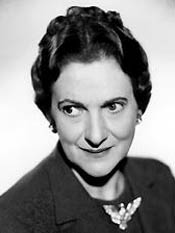 So they arrive at the farm, and whaddya know, MacMurray's mom IS Beulah Bondi. But it's the nice version, thank goodness. The rest of the movie chronicles the change in Stanwyck as Christmas shows her what family life can be like, and the change in MacMurray, as he falls in love with the shoplifter he's scheduled to put away. Both of them must decide what to do when they return to New York, and the trial. The fuss made there over Stanwyck's crime may seem more appropriate to Brigid O'Shaughnessy going down in The Maltese Falcon than a simple bracelet heist, but it still makes for a beautiful fadeout.
Nobody's all good, or all bad, not in my movies at least. There's a little bad in the best of us, and a little good in the worst of us.
Mitchell Leisen, who started out as a set decorator, was not beloved by his two most gifted screenwriters, Sturges and Billy Wilder. Sturges always maintained Leisen ruined the script for Easy Living. (This makes the Siren wonder just how much more perfect that priceless screwball comedy was supposed to be.) "A window dresser," was Wilder's kindest assessment; when recalling an incident on Hold Back the Dawn he lapsed into slurs on Leisen's homosexuality. Wilder biographer Ed Sikov says his subject was always too hard on Leisen, but then turns around and says Leisen didn't do much more for screenplays than "record them on celluloid and make sure the lighting was good."
Phooey, says the Siren. It isn't merely lighting that makes a moment like MacMurray and Stanwyck on the porch of her childhood home. As he tries to comfort her, over his shoulder you see the mother at the door, pausing for a moment--to hurl one last insult? to see if they're leaving?--then shutting off the lights. At MacMurray's farm, there's the way the canopy in her bedroom arcs over Stanwyck's face like a bridal veil, or the way the camera hovers over a barn dance and still manages to let you pick out the couple, Stanwyck happily blending in as she never did before in Indiana.
Remember the Night's chief flaw, in the Siren's eyes, is yet another of those comical African-American servants that pockmark Sturges's movies. "I loved this movie," says one Amazon reviewer. "That's a hard statement for a black man to make about any movie in which Snowflake has a role." But hey, Andrew Klavan of Libertas (a gent, the site notwithstanding) loved this one too. A film that can bring together such a mix of admirers must have a great deal of the true Christmas spirit.
And in that spirit, the Siren wishes her patient readers the happiest of holidays.